Bill and Ted are back—and this time, they’re putting on a musical.
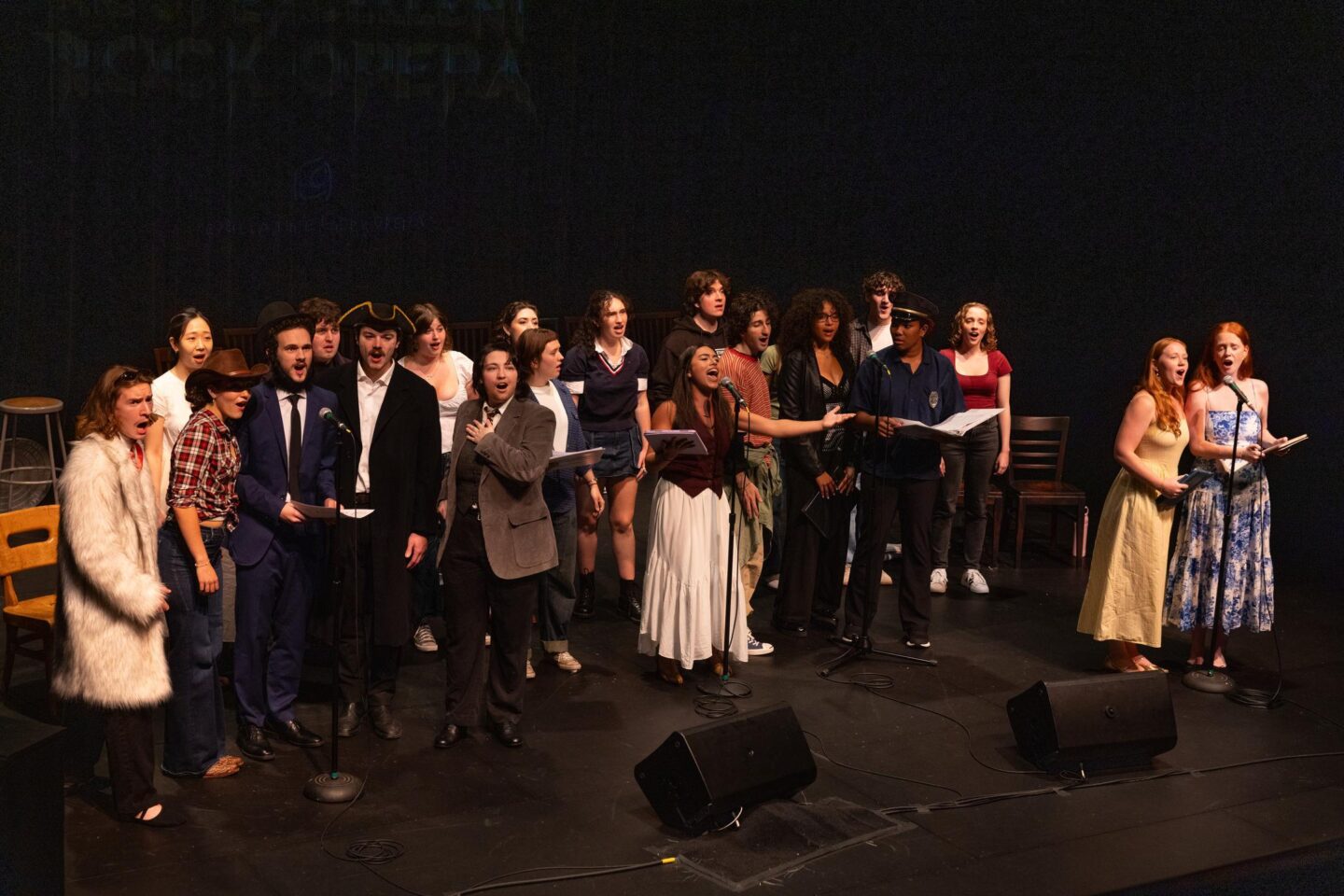
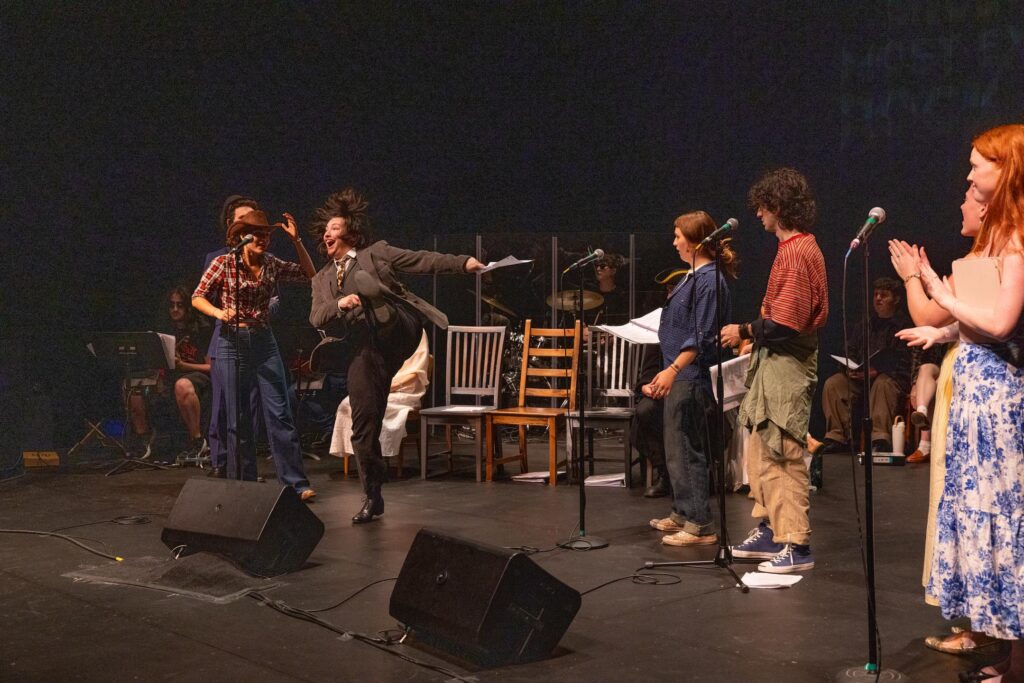
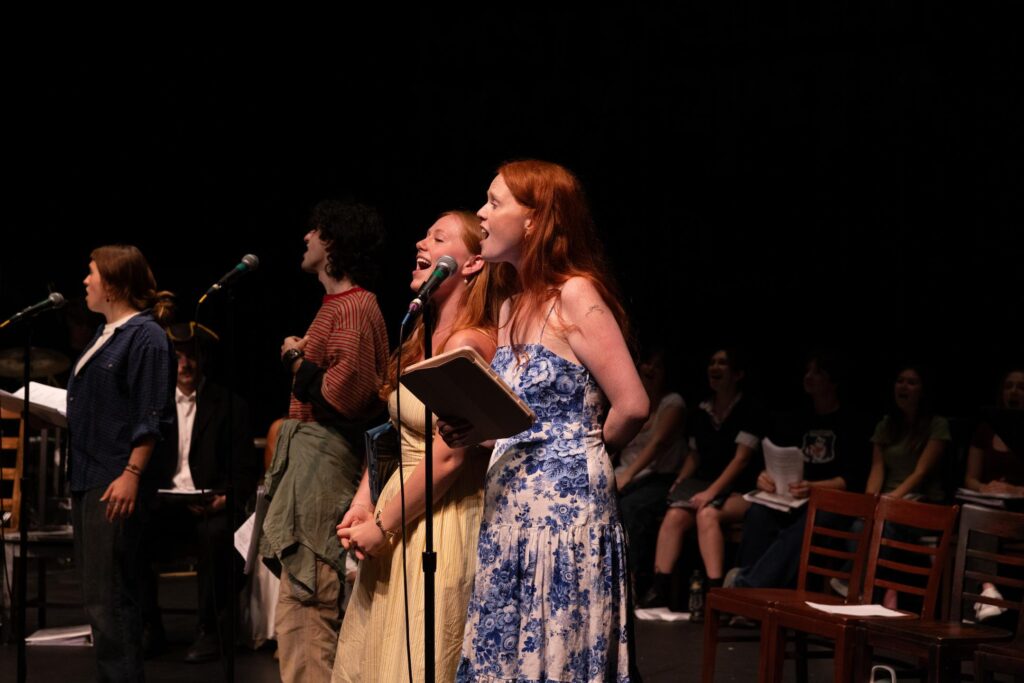
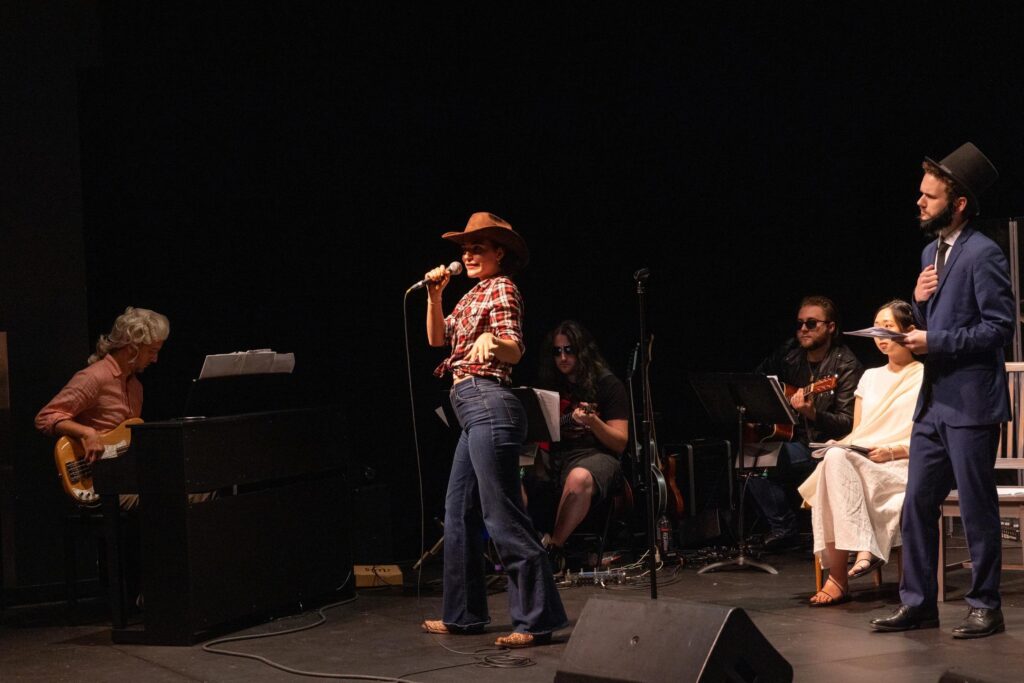
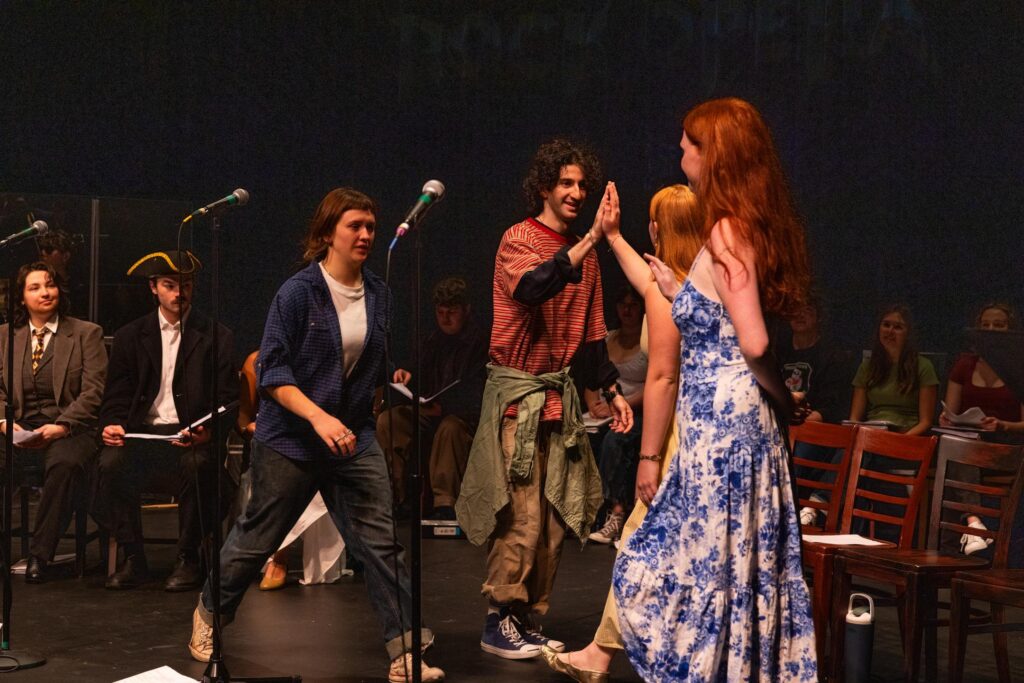
At a developmental reading at Emerson College’s Greene Theater on September 20, students from Emerson, Berklee College of Music, and Boston Conservatory came together to help shape Bill & Ted’s Most Excellent Rock Opera, a new musical based on the beloved film characters.
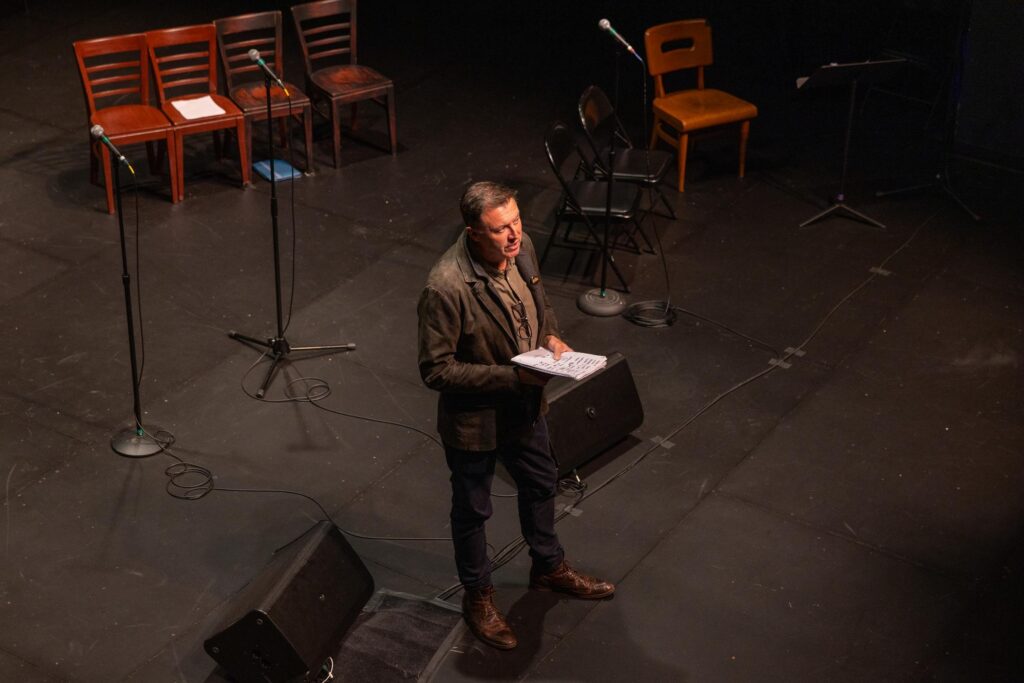
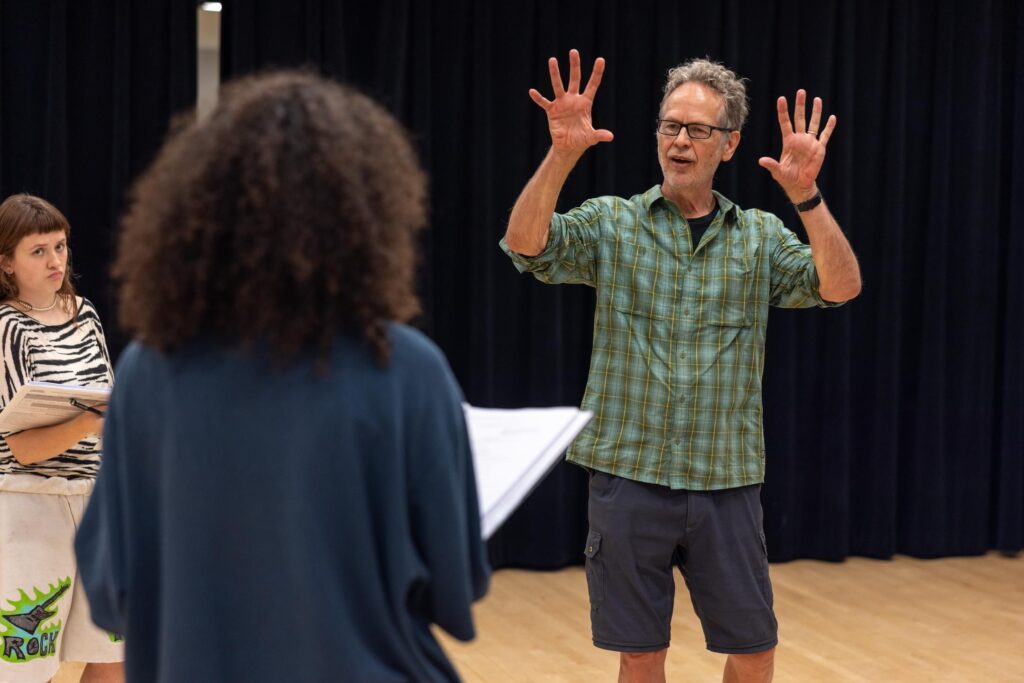
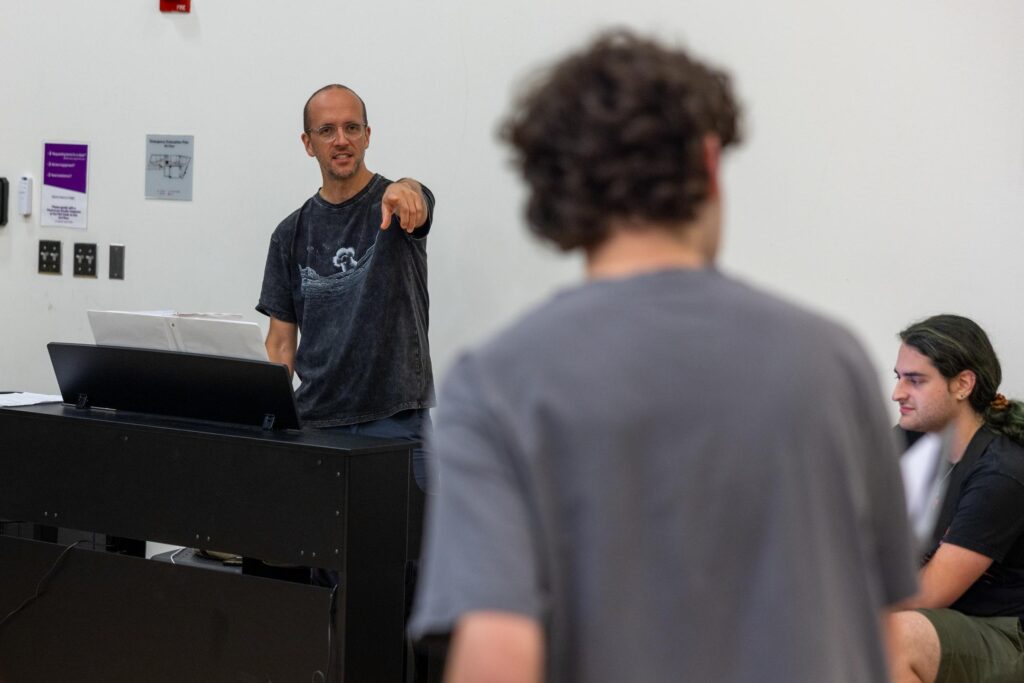
Part of Emerson Stage’s Pipeline Series, the reading gave the musical a chance to take shape onstage while it is still in development, without the costumes and sets of a full production. Chris Matheson, who co-wrote the Bill & Ted film franchise, wrote the book and lyrics, teaming up with Jason Lytle on the music. Both were on campus during the show’s production; Matheson directed the developmental reading and spent part of the week visiting two screenwriting classes.
For Matheson, bringing the project to Emerson was about more than developing a new musical. His hope is for Bill & Ted’s Most Excellent Rock Opera to eventually be licensed so that it can be performed in high schools and colleges across the country, or potentially even have a run on Broadway or the West End.
“I think that’s really exciting,” Matheson told students in a comedy writing class taught by Professor and Director of the Center for Comedic Arts Martie Cook ’82, MFA ’00. “The vision from the start was every high school and college doing it.”
In the musical, Bill and Ted are still high school juniors when they learn that their time travel adventure isn’t quite enough to pass the real final part of their history report. Their solution? Turn their experiences into a rock opera. Along the way, they enlist historical figures who they’re friends with from the three Bill & Ted movies, including Beethoven, Joan of Arc, and Socrates, to help create a show triumphant enough to save existence itself.
Matheson’s vision for the show made Emerson an especially fitting place to begin developing it—and gave students the opportunity to help shape a musical they could one day see performed by students like themselves.
For Xinyi Sun ’27, who played Socrates in the reading, that experience was “radically awesome.” Sun said the father of philosophy has his own distinct place in the musical.
Sun researched Socrates and learned the pronunciation of his name in ancient Greek, more specifically Attic Greek. That research helped Matheson evolve the script.
“The Greek r was an alveolar trill, different from the r in modern English,” Sun said. “Later in the rehearsal process, Chris decided that Socrates enjoyed his new nickname from Bill and Ted and the pronunciation evolved…but the rolled r was kept for the purpose of preserving the reality.”
Performance photos by Sophia Getz ’29
A New Kind of Emerson Stage Experience
Emerson Stage’s Pipeline Series gives ideas and unproduced properties an opportunity to be explored outside the structure of a full Emerson Stage production. It also creates opportunities for students to participate in the development of work that might continue beyond Emerson.
The Pipeline Series has previously included a workshop reading of Chantecler: A Musical Fable, and its programming is expanding to include other opportunities for students to work with new material, including the Short Works Festival and a Theatre for Young Audiences Festival.
Eric Paris, director of Emerson Stage Theatre Operations, has wanted to bring more new works in development to the Emerson student experience since he arrived at the College in May 2025.
In reconnecting with former Broadway colleague and producer Russell Miller, Paris learned that Bill & Ted’s Most Excellent Rock Opera was ready for development, and the two began talking about what it could look like to develop the musical at Emerson.
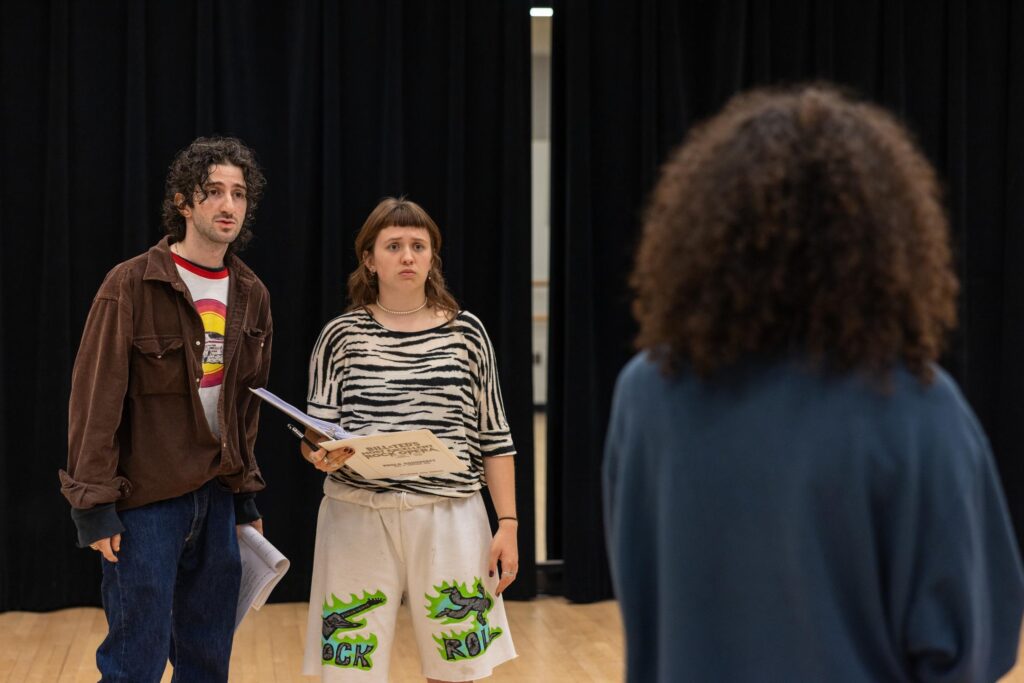
The project also offered students the opportunity to work alongside professionals while seeing firsthand how a new piece changes from one stage of development to the next.
“We’ve got professionals here from every level, in every corner, working with these students to really try and perfect something that is really in its embryonic stage,” said Miller.
The process was intentionally stripped down. Rather than building a complete production with finished scenery and costumes, students focused primarily on the material and the process of developing it.
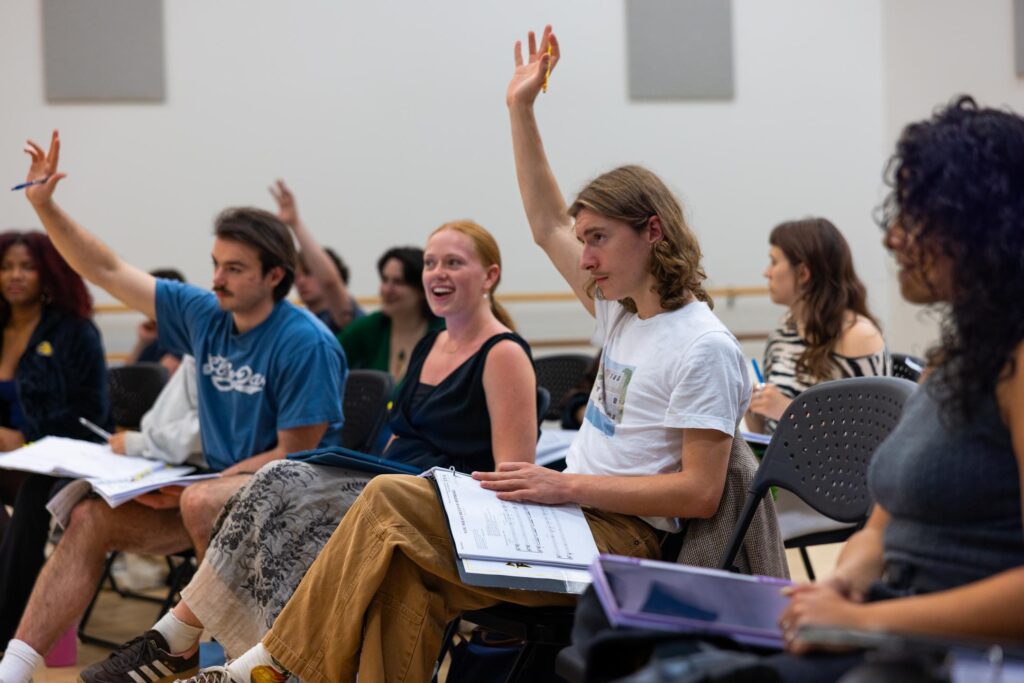
Student costume designer Parker Fedak ’28, for example, created conceptual costume designs rather than actual costumes. Prints of the designs were displayed during the reading. Student scenic designers also created conceptual paper designs, and a student sound engineer worked on the reading, while the cast included students from Emerson, Berklee, and Boston Conservatory.
“It’s been transformational,” Miller said of the partnership among the three institutions. “What started off as a meeting of minds, in terms of what we can achieve here, has really been crystallized in these nine days as something that is so uniquely special already.”
Learning From the People Making the Show
The educational experience extended beyond the rehearsal room.
In addition to visiting Cook’s Comedy Writers Room class, Matheson spent time with students in School of Arts Professor Ken Weitzman’s Playwriting class, where he spoke with students about his writing process and the origins of Bill and Ted. Miller spoke with students in Paris’s Arts Management course about commercial venue management and producing.
Music Supervisor Jonathan Brielle and Music Director Nathan Dame also worked with cast members, including providing voice lessons and discussing future opportunities.
For Matheson, much of his own approach to writing Bill and Ted came from knowing the characters so well that he could drop them into any situation and understand how they would respond.
He and Ed Solomon first developed the characters while studying at UCLA. They met through an improv group and began riffing with the idea of two teenage boys who knew little about world history. The characters became so vivid that Matheson and Solomon continued improvising as Bill and Ted at coffee shops and while just hanging out.
They eventually wrote the original Bill & Ted screenplay in 1984, five years before the movie was released. Matheson said the key was never to treat Bill and Ted as jokes. He and Solomon genuinely liked the characters.
“They were ridiculous, they didn’t know much, they were intuitive, and they were fun,” said Matheson of Bill and Ted.
That same spirit carries into the musical.
Rather than simply turning the first movie into a stage musical, Matheson wanted to create what he described as essentially the fourth installment of Bill & Ted. Matheson and Lytle also wanted to write an entirely new musical rather than build the score around existing songs. And because the musical is still being developed, the reading was an opportunity to discover what works—and what can be improved on.
Following rehearsals, Matheson continued tinkering with the material and adding jokes.
Students Get to Play
That freedom—of working on a musical in development—was one of the highlights for the students involved.
Toby Loeb Roberts ’28, who played Sigmund Freud, said they particularly enjoyed working with Dame and the production team, as well as the opportunity to improvise while the script was still evolving.
The reading also gave Roberts the chance to play a very different version of Freud from the historical figure.
For Nuala Dougherty ’27, who played Bill, the musical offered a new kind of performance experience. They had previously worked on small-scale professional productions, but primarily straight plays and straight acting.
“So doing that in a musical theater context has been super fun,” Dougherty said.
Sebastian Hurt ’28, who played Joan of Arc, similarly described the experience as “awesome,” particularly because it provided preprofessional experience while still feeling familiar to other Emerson Stage productions.
The production also gave stage manager Amit Keshet ’27 an opportunity to experience something new. Keshet has served on stage management teams for many Emerson Stage productions, student theater, and the EVVY Awards, as well as worked professionally at People’s Light and Theater Company and the Pennsylvania Shakespeare Festival. But this was her first time stage-managing a developmental reading.
The short process required her to work with people arriving with different levels of experience and different perspectives on the material, which was both challenging and rewarding.
“It gave me the opportunity to really strengthen my communication skills and professionalism,” she said.
From Development to the Next Stage
For the producers, the Emerson reading is one step in a larger development process.
“The life cycle, getting into the production piece of this, is that we expect, or we hope very much that we’ll be able to do a world premiere here at Emerson next year,” Miller said.
The larger goal, however, extends beyond one production, as he hopes for further distribution and licensing opportunities.
For Bill & Ted’s Most Excellent Rock Opera, the next adventure is already beginning.