With the start of every academic year comes new goals, new connections, and of course, new faculty members from a range of disciplines. The Fall 2026 semester brings a speech language pathologist specializing in augmentative and alternative communication, an Emmy Award winning director, a theatre historian, and the founder of a national book festival, to name a few new full-time faculty.
We asked them to answer a few questions about themselves and their fields. Part 1 of 2.
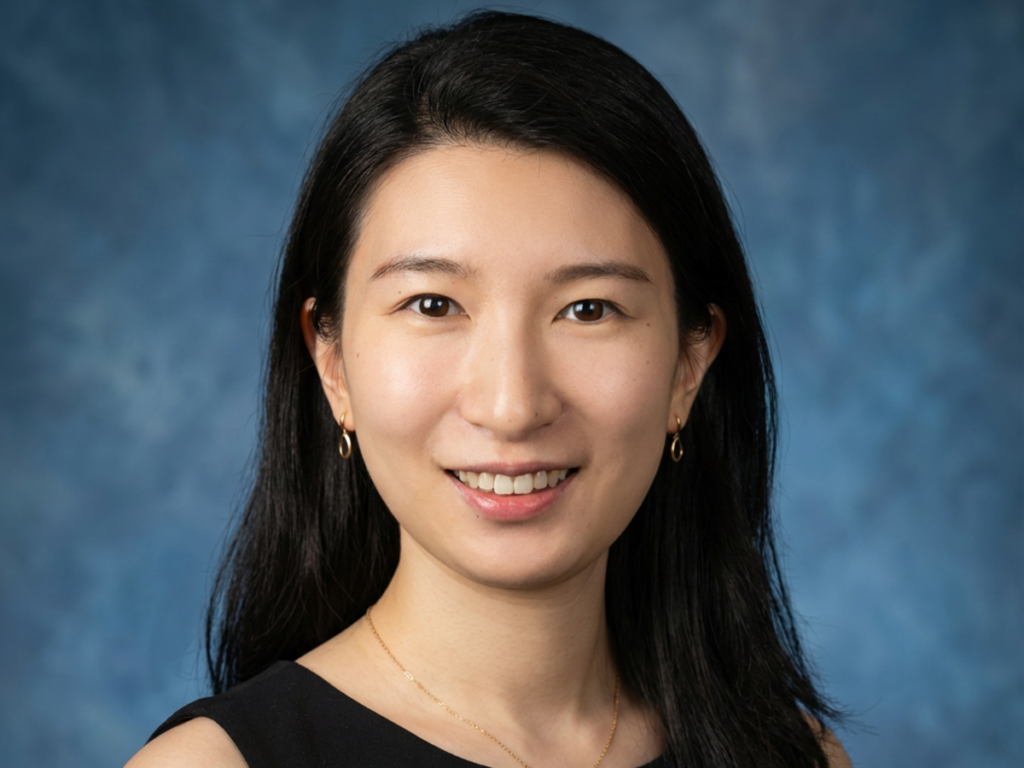
Cissy Cheng
Assistant Professor, Communication Sciences and Disorders
Cissy Cheng is a communication scientist and speech language pathologist who researches how to best promote communication access across healthcare and developmental contexts.
She has studied how augmentative and alternative communication (AAC) can support individuals with complex communication needs, and allow them to better connect with their families and the professionals who serve them.
Cheng is currently investigating multimodal communication supports for children with developmental disabilities, strategies of how to increase AAC implementation and access, and the various modern ways communication can be improved between providers and patients in acute and intensive care settings.
She is an alum of China’s Fudan University, Boston University, and the University of Texas at Austin.
What’s the most exciting development/trend happening in your field/medium right now?
One thing I am most excited about is how technology is opening up new possibilities in augmentative and alternative communication (AAC). There are more customized communication tools available that can fit an individual’s needs, communication preferences, and lifestyle. I am interested in how we can combine these technologies with family-centered intervention to not just help someone communicate, but to support their independence, participation, and ability to connect meaningfully with the people around them.
What’s the most interesting thing you’ve learned recently?
I learned how to make slime at my daughter’s birthday party! You mix glue with water, baking soda, and an activator. It was interesting to see how the texture changed. It was very sticky at first, but the more you mix and play with it, the less sticky and more stretchy it becomes.
What’s your favorite work of fiction (any medium) and most interesting work of nonfiction (again, any medium).
One of my favorite children’s books is Charlotte’s Web. I love how it captures friendship, kindness, and the cycle of life in such a simple and memorable way. I still cry every time I read it!
A work that is meaningful to me in relation to the field of acquired cognitive disorders is Still Alice by Lisa Genova. I like how it portrays the gradual changes in memory, cognition, and communication, while showing Alice trying to maintain her identity, dignity, and connections with the people around her. The support she receives from her family also really stands out to me!
What do you love to do when you’re not working?
I love spending time with my 8-year-old daughter. We enjoy reading, running, baking, and playing board games together. Our current favorite activity is building a fort out of cushions and playing Exploding Kittens inside it.
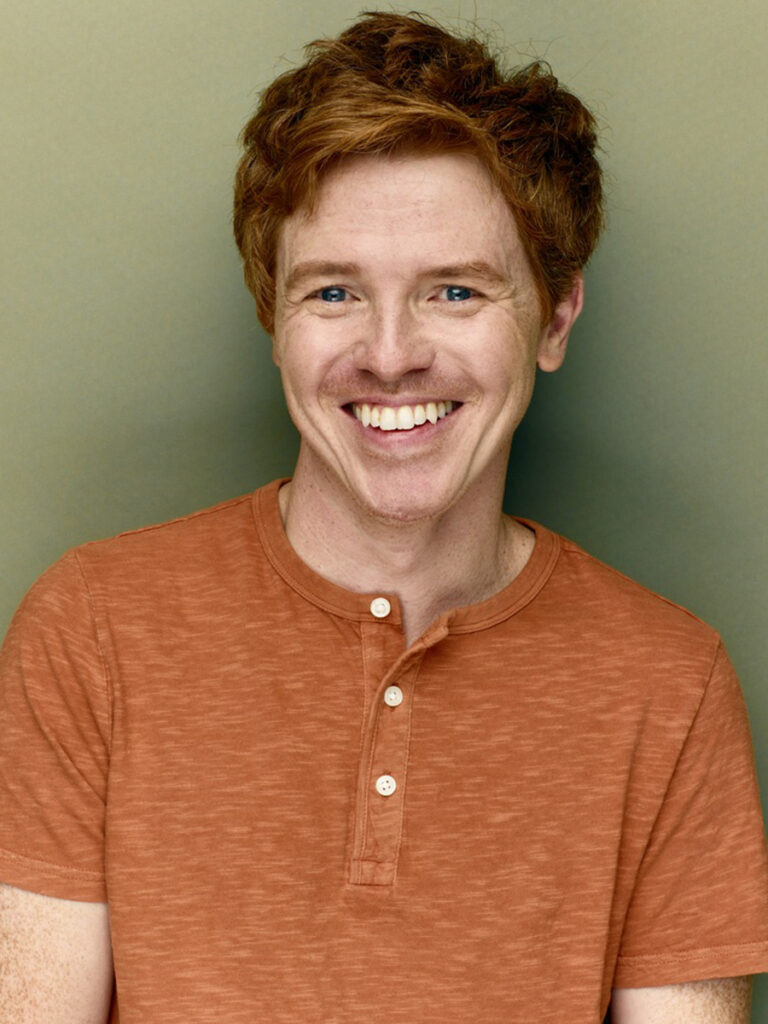
Adam Farabee
Artist-In-Residence, Performing Arts
Adam Farabee is an award-winning actor, director, and educator. He has worked extensively as an acting coach and teaching artist in Los Angeles and New York while maintaining a successful acting career on stage and screen.
Farabee’s television credits include recurring parts on popular shows including Shameless, Nobody Wants This, and Westworld. On stage, he has appeared in The Lieutenant of Inishmore, for which he received a San Francisco Bay Area Critics Award for Best Supporting Actor. His film credits include the 2017 movie Wilson, and an upcoming feature film by South Park creators Trey Parker and Matt Stone.
Farabee is an alum of the Julliard School’s drama division, as well as the University of North Carolina at Chapel Hill and the University of Idaho. He is a member of SAG-AFTRA, the Actors’ Equity Association, and the National Alliance of Acting Teachers.
What’s the most exciting development/trend happening in your field/medium right now?
I’m excited by what feels like a renewed interest in theatre and cinemas as some of the remaining “third spaces” (places outside of home and work where people gather, connect, and build a sense of community) in our increasingly isolated lives.
The entertainment industry continues to evolve rapidly, but the core of the art form – storytelling – is essential to understanding the human experience, and cannot be effectively replaced by AI. We want to go somewhere together, sit together, and be told a story together. We’re hungry for communal experiences – laughing/crying/screaming/sighing with a roomful of strangers, breathing the same air, being moved by the same story, and unpacking it afterward.
Whatever technologies, platforms, and business models continue to change, our fundamental need to tell stories and experience them together isn’t going anywhere. I am thrilled about the opportunity to train artists who want to be part of that rich storytelling tradition — to sit on our ancestors’ shoulders and help them develop the craft, imagination, generosity, and humanity required to tell stories that bring people together.
What’s your favorite work of fiction (any medium) and most interesting work of nonfiction (again, any medium).
Fiction: Mulholland Drive. David Lynch’s 2001 masterpiece is forever lodged in my brain: the dream logic, the haunting images, Club Silencio, the person behind the diner, the soundscape, and especially for Naomi Watts’s towering performance as Diane/Betty. She doesn’t simply play two different characters; she transforms the entire quality of her being — her voice, energy, physicality, rhythm, eyes, and relationship to the camera. Watching Betty slowly fracture into Diane is thrilling, and reflects the film’s strange, porous relationship between acting, fantasy, and identity.
Nonfiction: Julia Cameron’s The Artist’s Way has had a lasting impact on how I think about creativity and the life of an artist. I encourage everyone to adopt the practice of Morning Pages – three pages of stream-of-consciousness writing first thing in the morning, without editing, censoring, or worrying about whether the writing is any good.
I love the idea that creativity is a practice that needs to be cultivated, rather than something we simply wait to feel inspired to do. It gives permission to artists to be curious, playful, messy, and prolific – to follow an idea before knowing where it will lead. Morning Pages have become a way of clearing the mental noise and making room for curiosity, imagination, and new ideas in my life.
What do you love to do when you’re not working?
I recharge my introvert battery by being solitary in nature on long hikes (or with my sweet pup, Oona), and my extrovert side by being in community with family and friends, sharing time with people I love.
I’m also an avid gardener. I’m a self-taught, award-winning, drought-tolerant xeriscape landscaper. While I’m new to the Boston area, I’ve created a little paradise of succulents, cacti, native plants, and fruit trees at my home in Los Angeles. You might also find me at a local cinema or theatre, wandering through a sculpture museum, or traveling somewhere new.
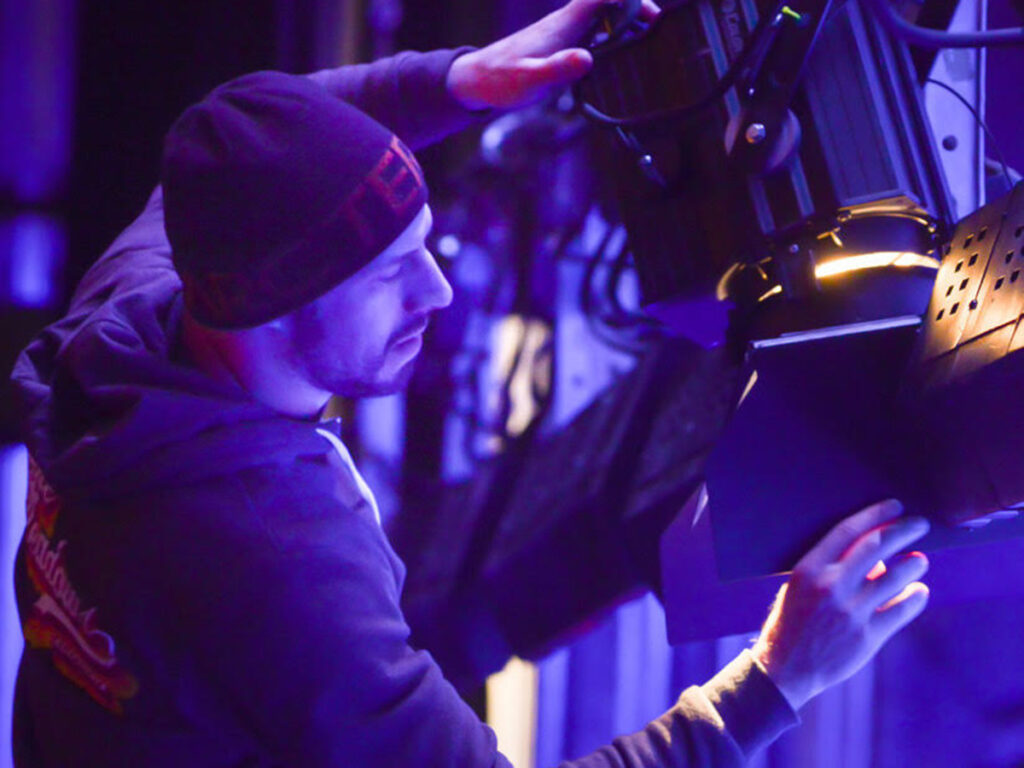
Daniel Jentzen
Waldman Chair and Artist-in-Residence, Performing Arts
Daniel H. Jentzen is a lighting designer, production designer, programmer, cinematographer, photographer, and teacher. His work has included creating lighting or stage designs for more than 800 plays, musicals, concerts, and broadcasts. Included among them have been special events for public figures such as Oprah Winfrey, Hillary Clinton, Conan O’Brien, and Brandi Carlile, as well as major companies, including Disney, Google, and Vice Media, to name a few.
Jentzen is also the founder of Brighter Boston, a nonprofit organization that gives teenagers paid internships backstage on professional shows. He teaches lighting design at Boston Arts Academy, the city’s public arts high school, where he helped design and build its performing arts center. As an academic, he has also taught at Boston University and Salem State University, and conducts research on multisensory perception, exploring the power art can have on the human mind.
He is an alum of Harvard University and Carnegie Mellon University.
What’s the most exciting development/trend happening in your field/medium right now?
These days, cameras can shoot in very low light, with very high dynamic range, without sacrificing a quality image. It’s allowing cinematographers to produce much more subtle and creative looks on film – looking a lot more like live theatre!
What’s the most interesting thing you’ve learned recently?
1. Some people are born with a fourth type of cone cell in their eyes, which is most sensitive to amber wavelengths. It’s called tetrachromacy, and could allow them to distinguish a hundred times more color variations than most people. However, this could create challenges, to perceive the world completely differently from other people.
2. Infrared light was discovered by accident, when someone held a thermometer off the red end of the rainbow, and found that it still had heat.
3. We used to use glass bottles filled with wine to change the color of stage lights (which at the time, were candles).
What’s your favorite work of fiction (any medium) and most interesting work of nonfiction (again, any medium).
Fiction: Cryptonomicon by Neal Stephenson
Nonfiction: Pilgrim at Tinker Creek by Annie Dillard
What do you love to do when you’re not working?
Rock climbing and hanging out with my awesome kids!
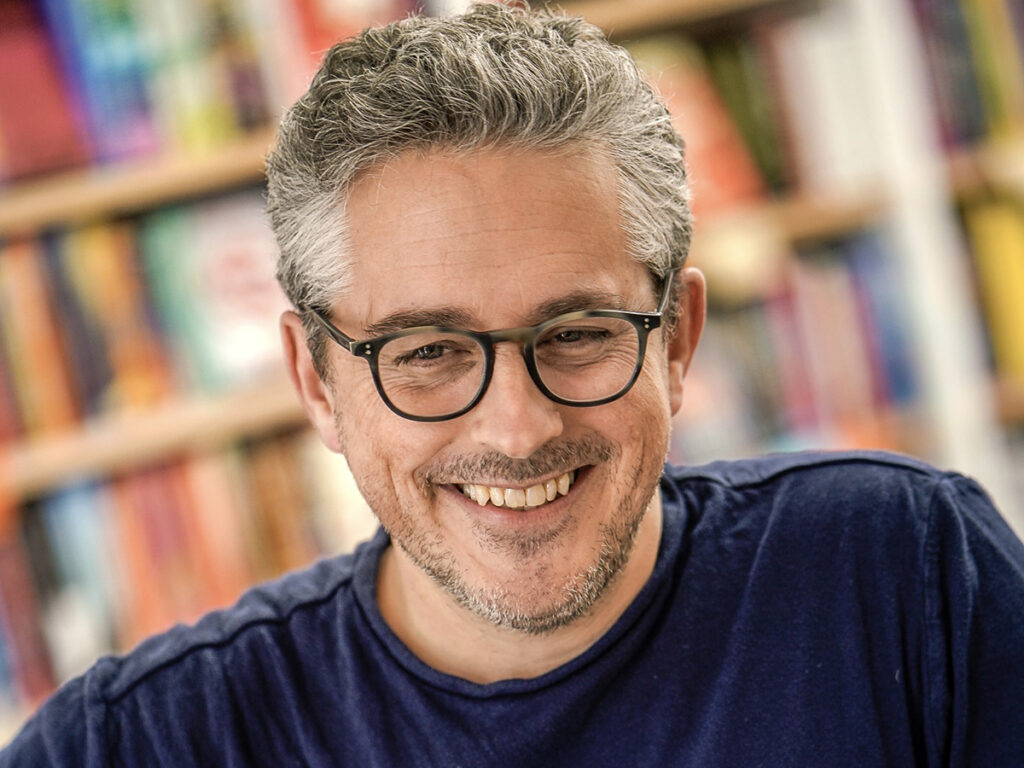
Alex George
Writer-in-Residence, Writing, Literature and Publishing
Alex George is a novelist, bookstore owner, and book festival founder who has had his work translated into more than 10 languages. His novels include A Good American, Setting Free the Kites, and The Paris Hours, and his writing has also appeared in national publications, including The Washington Post and Literary Hub, among others.
In 2022, George was named Midwest Independent Bookseller of the Year by the Midwest Independent Booksellers Association for his store, Skylark Bookshop, in Columbia, MO. He is also the founder of Columbia’s Unbound Book Festival.
A former attorney, George read law at Oxford University, and has practiced law in London, Paris, and across the Midwest.
What’s the most exciting development/trend happening in your field/medium right now?
I’m especially interested in, and delighted by, the growing role and influence of small, independent presses in the book industry. These publishers often punch way above their weight in terms of the work that they produce, and their contributions to the ongoing literary firmament. What they might lack in resources they more than make up for in bold editorial acquisitions and innovative creative choices. Thanks to small presses across the country, important and exciting voices that might otherwise not be heard are being published, and for this, all readers should give thanks.
What’s the most interesting thing you’ve learned recently?
In doing research for my new novel, I’ve been reading a lot about mathematics, and have recently discovered the concept of ‘proof by contradiction’. This is a fascinating method of establishing a mathematical proof by assuming the exact opposite of what you are trying to prove, and then showing that such an assumption gives rise to some kind of mathematical impossibility – thereby establishing that the inverse must be true. As very much a non-math person, the idea is confounding to me on so many levels – it leaves me both dazzled and suspicious. (But, as a writer, I recognize an excellent metaphor when I see one.)
What’s your favorite work of fiction (any medium) and most interesting work of nonfiction (again, any medium).
This is an impossible question for any writer, and especially impossible for a writer who also owns a bookstore. Favorites come and go – ask me again next week and I will almost certainly give you a different answer. That being said, one novel I loved this year and am still thinking about is The Loneliness of Sonia and Sunny by Kiran Desai, which is everything I crave in a novel.
For nonfiction, I’ll plump for Elizabeth McCracken’s wonderful book about the craft of writing fiction, A Long Game, which I will be using (not for the first time) in my creative writing graduate workshop this semester.
What do you love to do when you’re not working?
My bookshop, Skylark Bookshop, is in Columbia, MO, and while I now live several states away, I am still very closely involved in its day-to-day operations. There’s so much that goes into running an independent bookshop, and I love [that] aspect of it. I also love cooking unnecessarily complicated meals, and am fiercely devoted to my collection of jazz records, many of which are older than I am.
Ryan McCarthy
Artist-in-Residence, Performing Arts
Ryan McCarthy has been an actor and educator in theatre, television, and film for more than 30 years. His film work includes the independent feature Death on the Brandywine, and Domenica Cameron-Scorsese’s Almost Paris, which premiered at the Tribeca Film Festival. On TV, he has appeared on Law & Order, Billions, WeCrashed, The Sinner, New Amsterdam, Elementary, and more.
On stage, McCarthy has worked with companies including Manhattan Theatre Club, Roundabout Theatre Company, The Public Theater/Shakespeare in the Park, Pittsburgh Public Theater, and Portland Center Stage.
His work as an educator has included teaching undergraduate acting and public speaking at the University of California San Diego, as well as teaching performance and theatre to students across New York City and adults in correctional facilities.
McCarthy is an alum of the University of California San Diego, Harvard University, and The Public Theater’s Shakespeare Lab.
What’s the most exciting development/trend happening in your field/medium right now?
More adventurous plays reaching larger audiences. The kind of work that has long flourished beyond Broadway and in the nonprofit theatre is increasingly finding a place on Broadway as well. Think of Lucas Hnath’s Dana H., which tells the harrowing true story of Hnath’s mother being abducted and held captive for five months. The production used recordings of her actual voice, which the mesmerizing Deirdre O’Connell lip-synced onstage. It was formally strange, psychologically intense, and about as far from conventional Broadway fare as you could get.
It’s also incredibly exciting that some of the most daring plays hitting Broadway aren’t brand new. Branden Jacobs-Jenkins’s Appropriate finally reached Broadway roughly a decade after it premiered, and his Gloria, another play from the mid-2010s, is now headed there as well.
What’s the most interesting thing you’ve learned recently?
If you thoroughly shuffle a deck of cards, it is a near certainty that the resulting configuration has never existed before in human history. In fact, there are more possible arrangements of a 52-card deck (52 factorial) than there are atoms on Earth. It sounds like nonsense, but it is unequivocally true. There is more possibility packed into the ordinary world than we can intuitively comprehend.
What’s your favorite work of fiction (any medium) and most interesting work of nonfiction (again, any medium).
Fiction (film): Paddington 2. No explanation needed. When I tell people it’s my favorite, they ask what I think of Paddington 1, and I say, ‘Why the hell would I watch Paddington 1?!’
Nonfiction (TV): The Rehearsal, Season 1. Is it nonfiction? I don’t know, and neither do you, which is what makes it mind-bendingly brilliant. Why haven’t I watched Season 2? Maybe for the same reason I haven’t seen Paddington 1. Or maybe not. Who can say? Not I. Or can I? I don’t know.
What do you love to do when you’re not working?
Argue with my friends about art. Anything involving cats. Or just acting. The day acting only feels like work is the day I stop.
Jonathan June Rizzardi
Scholar Artist-in-Residence, Performing Arts
Jonathan June Rizzardi is an educator, performing artist, and theatre historian. Rizzardi has trained theatre educators to serve young people in a wide range of settings, including public schools, arts outreach programs, and complex spaces of trauma stewardship, such as juvenile detention centers, drug rehabilitation facilities, and foster care systems.
Rizzardi’s practitioner work extends across fields of movement-based storytelling, youth creative drama, and arts integration promoting mental health and wellness practices. Their academic writing has been published by Routledge, Vanderbilt University Press, and in the New England Theatre Journal, and explores various topics, including how acts of education and maturation intersected with public performance in early 20th-century America.
Rizzardi is an alum of the University of Washington and St. Mary’s College of Maryland.
What’s the most exciting development/trend happening in your field/medium right now?
The emphasis on policy and practice in SEL (Social and Emotional Learning) is worth a lot of enthusiasm! As a researcher and practitioner training future arts educators, I believe the convergence of brain-science research, recognizability of affect theory (and practical forms of embodied healing), and U.S. public school initiatives has led to a flashpoint moment for SEL. Theatre educators are uniquely trained with expertise on the body-site, somatic aid, and classroom management linked to embodiment and community — so despite the impetus being the exigencies of this tough era for schooling… the pathways towards the future of student support are promising.
What’s the most interesting thing you’ve learned recently?
I just drove cross-country from Seattle to Boston; so, procedurally alone, that was a wild and wonderful learning experience! In my research recently, I was thinking about the Northeast even before arriving—for instance, did you know that in Jamaica Plain during the late 1930s, the Federal Theatre Project was supporting mentorship programs between professional theatre artists and high school students? Nearby, the FTP linked young women from an orphanage to perform an original adaptation of Alice in Wonderland for college theatre students. The archive is ripe with stories of theatre education making a difference in children’s lives!
What’s your favorite work of fiction (any medium) and most interesting work of nonfiction (again, any medium).
This is so difficult! I’ll say my favorites (right now) are Ada Limón’s poetry collection Bright Dead Things (a profoundly awakening book of poems that suctions the marrow from what I think being alive might be about) and bell hooks’ Teaching to Transgress: Education as the Practice of Freedom (the teaching text as endless in its efficacy as hooks’ writing is to the field of critical pedagogy).
What do you love to do when you’re not working?
Stay curious and do things that let me live in my body — I play a lot of basketball and follow several hoop leagues closely (especially as we approach the WNBA playoffs!); I swim oodles; run, hike, frisbee. [I] play guitar and piano. Plus, engaging in coffee and conversation with people I love, and the folks in my community — which makes me think and feel deeper about the work I am lucky to do each and every day.