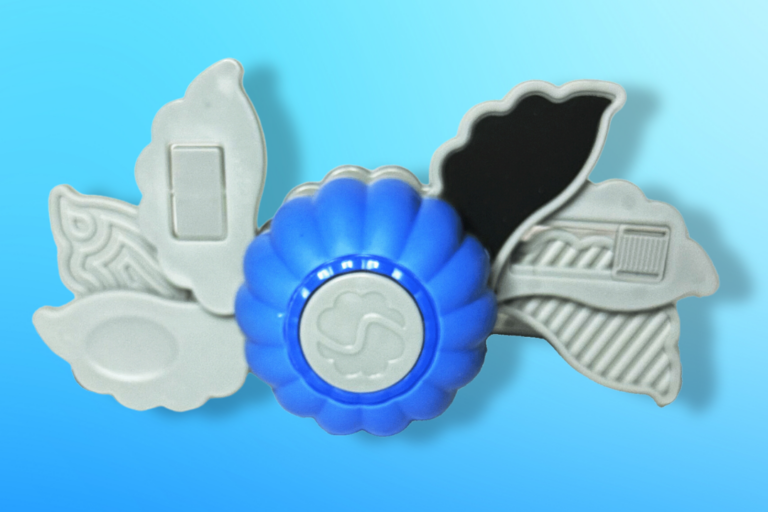
For Eliana Wydra, MA ’26, the idea of creating a multitool fidget came from an easy observation—people have different sensory preferences—and those preferences can change day to day.
That led Wydra to create the 7-in-1 fidget Sidekick while she was an industrial design undergraduate at Drexel University. At Emerson, where she’ll graduate this December with a master’s degree in Business of Creative Enterprises (BCE), Wydra was able to refine her product and learn the business side during her yearlong BCE senior thesis.
Wydra, who is neurodivergent, wanted to create something modular that would allow people to choose what worked for them at any given moment.
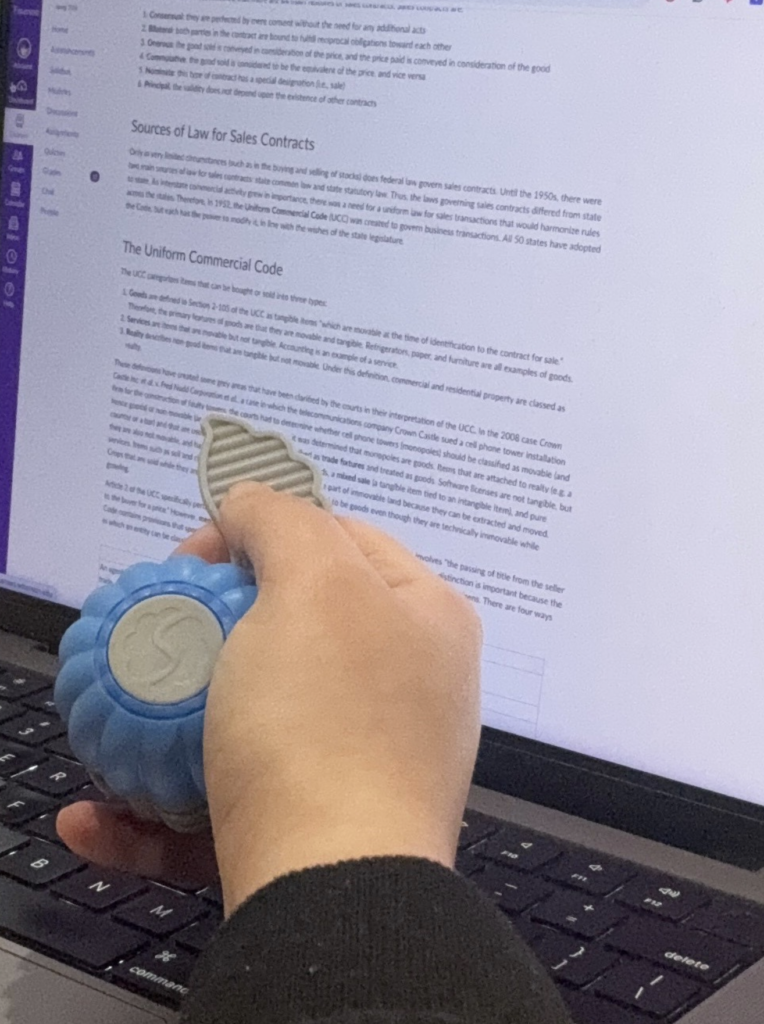
Sidekick features removable “wings,” each offering a different tactile experience. The product includes several different features, including pieces that can be scratched, rotated, slid, or manipulated with the thumb. Users can keep the entire device together or remove an individual wing depending on their preference.
“There’s no one size fits all,” Wydra says. “Everyone has different preferences.”
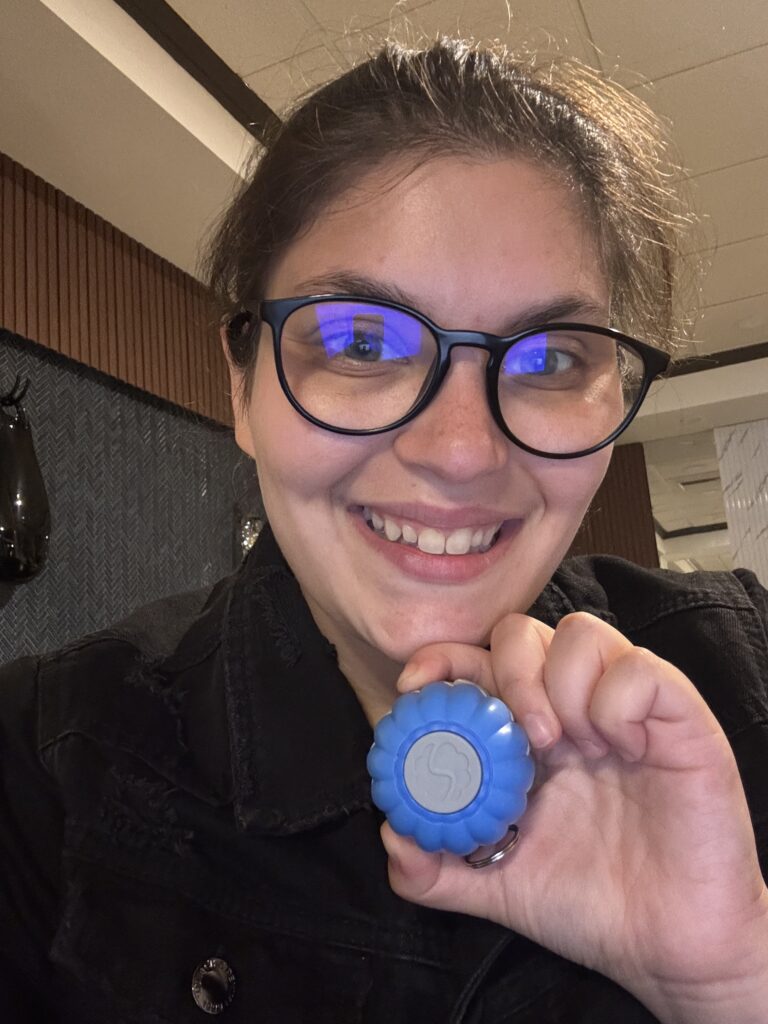
Wydra uses Sidekick herself—frequently.
“I’m actually using it right now,” she said during an interview.
The discreet design is particularly useful for situations that can heighten anxiety, such as public speaking, presentations, meetings, interviews, and classes. Rather than requiring someone to visibly use a traditional fidget, Sidekick can be manipulated discreetly in the hand.
And the product’s name has a specific meaning.
“Because you’re the hero,” Wydra explained.
From Design to Business
While Wydra entered Emerson with a strong understanding of design and how to make a physical product, she wanted to develop her understanding of what comes next: How do you sell it? How do you market it? How do you protect it? And how do you tell its story?
That is where her BCE education became particularly valuable—and is exactly what attracted her to Emerson.
She said she has applied lessons from her Emerson classes directly to Sidekick, including assignments involving press releases, partnerships, and outreach.
As she considers approaching retailers, for example, she says her coursework has helped her think through how to contact stores, what information to provide, and how to structure those conversations.
Her Emerson education has also helped her become more disciplined about the business side of her work. One class, in particular, stood out even before she enrolled at Emerson—Legal Foundations, taught by School of Communication Affiliated Faculty Franklin Graves.
Graves’ class helped her understand the pieces of the process she hadn’t encountered before. Wydra reached out to Graves with questions about issues she was encountering as she developed Sidekick. He provided resources and helped her think through questions to ask attorneys regarding trademarks and patents.
That knowledge proved especially useful as Wydra pursued a trademark for the Sidekick name. Wydra says protecting the name is important because “Sidekick” is used by many different products and businesses, and the trademark helps distinguish her particular product.
Building Sidekick
Sidekick began as a 3D-printed prototype. Eventually, Wydra partnered with a manufacturer to move to injection molding, creating a more durable and consistent product.
She even received some unplanned product testing from her young nieces.
“I’ve had my nieces throw Sidekick across the room and it was fine,” Wydra laughed. “They’re 3 and 5.”
Sidekick has been available for purchase for about two years, with sales primarily taking place through Wydra’s website senseitlife.com. (Emerson’s Iwasaki Library purchased a few to have on hand for members of the Emerson community.) Wydra has also begun expanding beyond direct sales, including working with a small business owner in Arizona who sells 3D prints and fidgets and agreed to carry her products.
For now, Wydra is balancing the business with graduate school. She is based in New York City and has been completing her Emerson degree remotely.
Social media has become another way of getting Sidekick in front of potential customers. She primarily focuses on Instagram, while TikTok has generated some of her most notable responses.
Wydra says she sees the popularity of fidgets as part of something much bigger than a recent trend.
“Fidgets have always been popular,” Wydra said. “You see people spinning a pen or clicking a pen. That’s all fidgeting.”
Her goal with Sidekick is to give people more choices in how they engage with that instinct.
“Mainly because everyone has different preferences,” she said.
But Wydra isn’t finished designing.
She is sketching and 3D modeling ideas for additional fidgets. For now, though, she is excited to see where Sidekick takes her.
“I really enjoyed the whole learning process of all of it,” Wydra said. “I’m excited to finish my degree and see where Sidekick goes and see how to apply what I’ve learned.”