For six weeks this summer, Emerson graduate students studied sports communication from two very different perspectives: first through readings, discussions, and research, and then by stepping directly into the world they had been studying.
The inaugural Sports Culture and Society summer course brought students in Emerson’s graduate Sports Communication program together for a two-and-a-half week-long immersive experience in Los Angeles after three-and-a-half weeks of asynchronous coursework. While staying at Emerson’s Los Angeles campus, students attended a FIFA World Cup match, a Los Angeles Dodgers game, and a Los Angeles Sparks game against the New York Liberty—three events that offered a firsthand look at how sports intersect with culture, community, politics, identity, and global communication.
“The class was the perfect combination of academic theory and real-life examples,” said Jade Berthet, MA ’26.
For Communication Studies Associate Professor and Graduate Program Director Mary Anne Taylor, the experiences represented the core idea behind the course.
“This was a course around the study of community and culture around these mega sports events,” said Taylor. “While sports is about athleticism and about the athlete, for sure, sports is also a platform and lens for understanding the humanity of all of us.”
From the Classroom to Dodger Stadium
Students visited Dodger Stadium on their first morning, when they went behind the scenes and met with members of the Dodgers’ communications and public relations teams, asked questions about working in professional sports, toured the stadium, and walked onto the field. They also had a quick meeting with Sports Communication Affiliated Faculty Tim Neverett ’88, who was busy doing play-by-play for the Dodgers’ radio broadcast.
For Sports Communication major Carli Buchholtz, MA ’27, the experience was both exciting and instructive.
“We sat down in official offices. And then they walked us out onto the field,” Buchholtz said.
The Dodgers staff also offered advice about career paths and job hunting, creating an opportunity for students to speak directly with professionals doing the work they hope to pursue. Students asked about the realities of working in professional baseball, including the long hours and demands of the job.
For Taylor, the Dodgers experience also demonstrated how sports can become a global cultural phenomenon.
Students witnessed firsthand the impact of international superstar Shohei Ohtani. Taylor noted that the majority of stadium tours taking place during their visit were in Japanese, reflecting the number of visitors who had traveled from Japan.
“It was the Ohtani effect,” Taylor said, pointing to the ways one athlete can influence a team’s international reach, economics, and cultural identity.
And, as if on cue, Ohtani delivered. The Dodgers won that game thanks to Ohtani’s eighth inning home run.

A Global Game
The World Cup offered an even broader perspective, as the World Cup has a truly global reach.
The tournament provided a living case study of how athletic competition can intersect with international relations, national identity, diplomacy, and political power.
Berthet attended an Iran-New Zealand World Cup match with a classmate and used the experience as part of her final research project. She examined FIFA’s rhetoric and policies celebrating the internationalism of the tournament and how those ideals compared with the organization’s treatment of teams, particularly Iran.
“[Having] the scholarly side to be tied to real-life examples made it clearer and more interesting,” Berthet
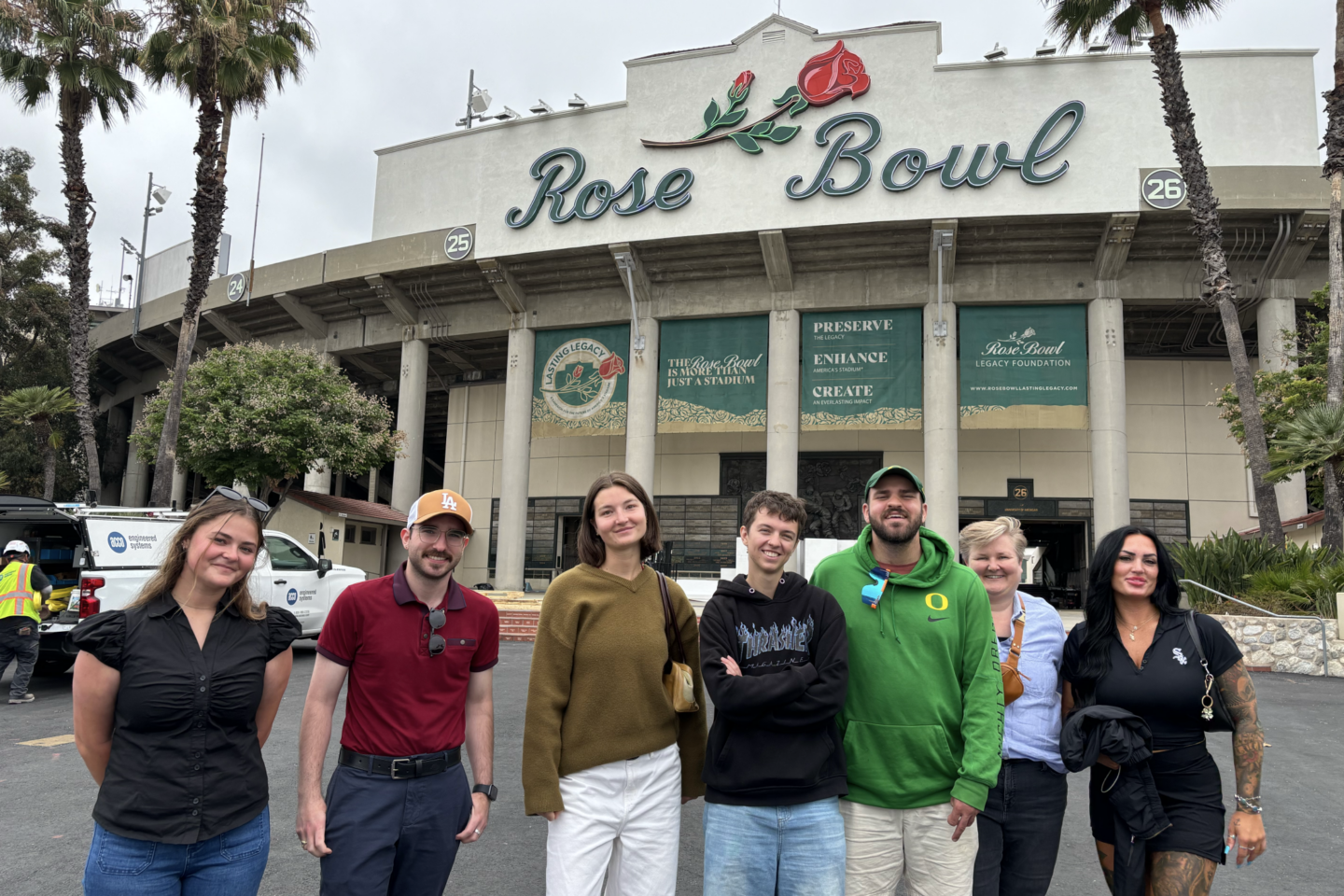
Students also attended an official World Cup party during the U.S. match, visited the Rose Bowl, and the Los Angeles Memorial Coliseum, further expanding their understanding of the institutions and spaces that surround major sporting events.
Thirty Years of the WNBA
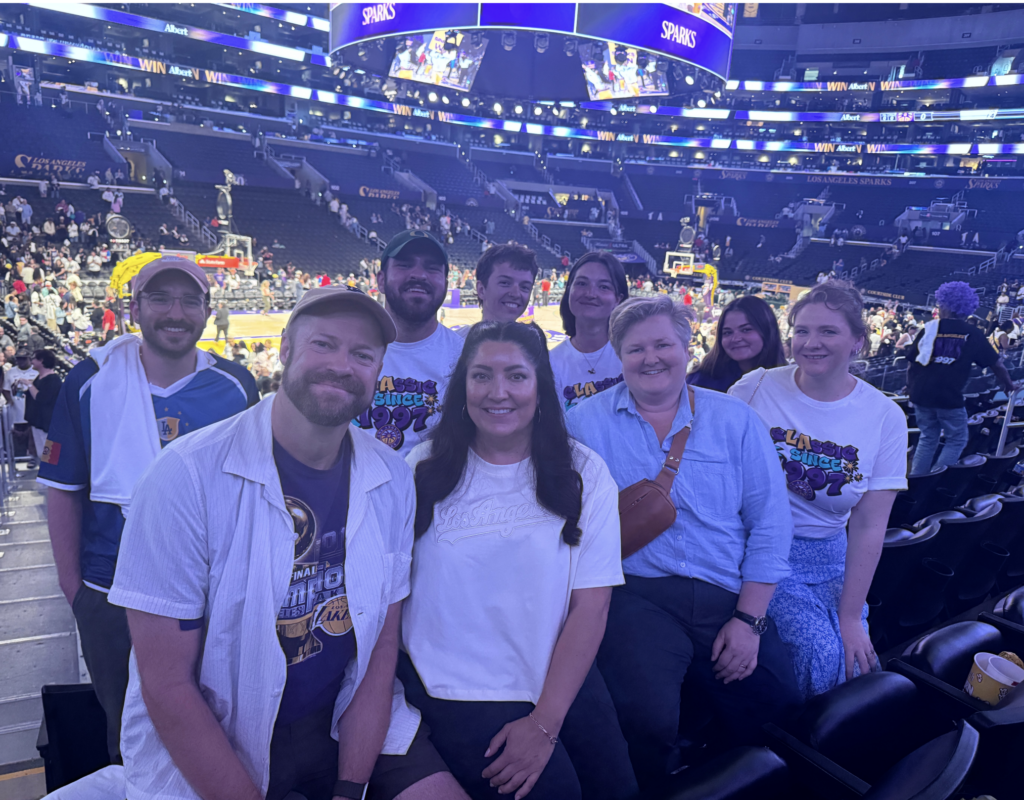
Students enjoyed another powerful lesson in sports and culture when they attended the Los Angeles Sparks game against the New York Liberty.
The game was played on June 21, 30 years to the day after the two teams met in the first game in WNBA history. To commemorate the anniversary, the Sparks and Liberty brought back original players and coaches and reenacted the opening tip.
It was a chance for students to witness the history they had been studying.
“It was spectacular,” Berthet said.
The moment also highlighted how much women’s professional sports have changed in three decades. Taylor pointed to the growth of the WNBA, the role of Sparks players in advocating for athletes, and the league’s evolving economics and labor landscape.
For Taylor, who remembers watching that first WNBA tipoff 30 years ago, attending the anniversary game carried personal meaning.
“I remember that first tip with Lisa Leslie 30 years ago,” Taylor said. “I remember what the WNBA meant to me as a kid—to see opportunities that women had in sports. And to share that memory and event with them was really a special moment for me.”
The Olympics are Coming
Taylor’s course was built around more than just attending high-profile, impactful games and visiting sports organizations and venues. Students ultimately did research projects and presented their original work to their classmates and Taylor.
Buchholtz looked at the differences between the National Women’s Soccer League in the United States, and Europe’s Women’s Super League. She examined their approaches to game coverage, social media, and marketing.
She said the Los Angeles experience was unlike anything she had encountered in a traditional classroom.
“I can’t say I’ve ever learned that much from a single course—ever,” Buchholtz said. “There’s nothing like hands-on learning. We were able to ask the question to the person you want the answer from the most.”
Taylor described the methodology as a form of fieldwork in which students were asked not simply to observe, but to bring their own backgrounds, perspectives, identities, and goals to what they encountered.
“The academic meets immersion,” she said.
That distinction is central to Taylor’s vision for the Sports Communication program. Emerson’s Boston campus gives students access to one major media market, while Emerson Los Angeles places them in the second largest market in the country—one that is deeply connected to global entertainment, sports, media, and culture.
Taylor envisions the course being built around other major sporting events, particularly as Los Angeles prepares to host the 2028 Olympics. She sees opportunities to explore everything from fan engagement and global perspectives on sports to community relations, political negotiations, and the relationships among city, state, and federal governments.
“Sports is a lens for engaging with diplomacy and how cultures and communities and countries talk to each other,” Taylor said. “Sports can be a lens for communicating across differences and understanding differences and celebrating differences.”