Along with hundreds of new Emersonians, the College is excited to welcome 11 new faculty members to campus from a range of disciplines and corners of the world this academic year. Each of them brings unique expertise and passion for their fields to the classroom, with niches ranging from journalism to production design.
We asked them to answer a few questions about themselves and their fields. Enjoy their answers below, and in case you missed it, read about the first six new faculty members.
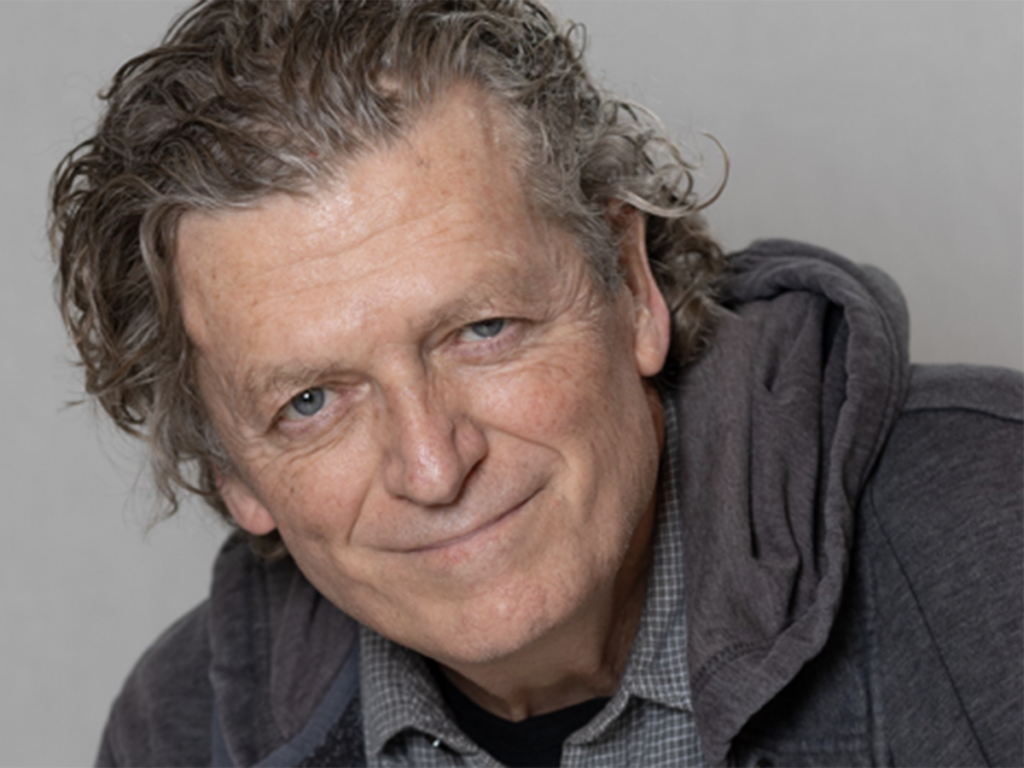
Brian Mertes
Distinguished Director-in-Residence, School of Film
Brian Mertes is an Emmy Award-winning director who has worked extensively across theatre, film, and television. Over the course of his career, he has directed for networks including ABC, CBS, NBC, and FOX, and subsequently earned three Emmy nominations and three Directors Guild of America nominations.
His film, I Am a Seagull, has been presented at several film festivals across the world, and his production of Jedermann served as the centerpiece of the Salzburg Festival for four consecutive summers, simulcast across 700 theatres in Germany and Austria. In New York, he has directed numerous productions of new plays, spent a year as director-in-residence at New Dramatists, and is a member of Ensemble Studio Theatre. Most recently, he presented The Meeting: The Interpreter off Broadway.
Before coming to Emerson, he spent 16 years as professor of the practice and head of the Brown University/Trinity Rep MFA Directing Program, and has taught or guest-directed at Juilliard, Columbia, New York University, and Yale School of Drama.
What are some exciting developments and trends in the field right now?
There is enormous opportunity at this moment in the industry with the rapid development of new systems and technology. The question of ‘liveness’ is at the center of my research: What is live, and meaningful for the contemporary viewer. Multicamera production is an ideal environment to create these events and stories, both in the studio and site-specific, whether that’s live performance, live sports, live journalism, or narrative and non-narrative storytelling.
What’s the most interesting thing you’ve learned recently?
Any answer here will be reductive, but I continue to learn every day about the nature of collaboration: what it is, how it works, how it collapses, what can work, what can hold up, and how the work of a group can surpass the work of individuals, while also supporting individual growth.
What’s your favorite work of fiction (any medium) and most interesting work of nonfiction (again, any medium).
I have been reading The MANIAC by Benjámin Labatut, about John Von Neumann and the beginnings of the computer and the world we currently exist in. What happens when intelligence outruns wisdom? It’s structured like a chorus, dozens of voices, circling a man no one could quite see whole. I am hoping to continue to work on bringing this to a live performance.
I am also currently in the edit for a project I created in January 2026 with a string quartet at Community Music Works in Providence, RI, titled Lab Concert 1. It’s a remarkable program of music, and the project is thrilling, and so full of potential.
What do you love to do when you’re not working?
Honestly, I am seeking as many opportunities to be in nature, camping, hiking, traveling, and to be with my family and loved ones with shared time, space, and food.
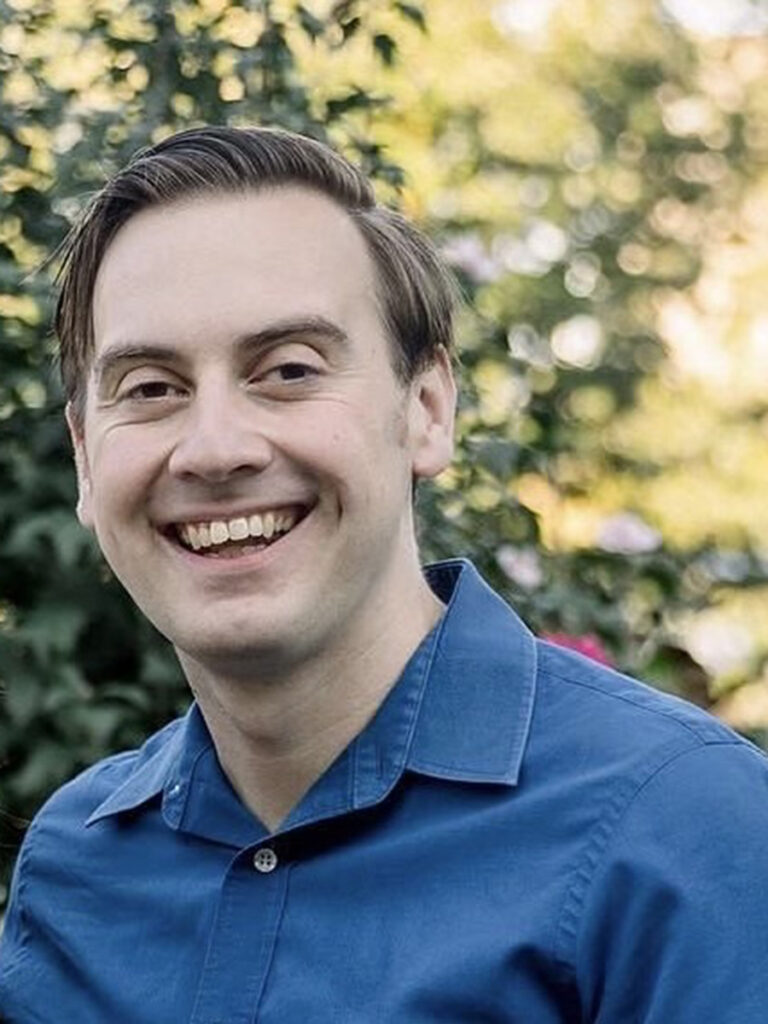
Brian M. Robillard
Artist-in-Residence, Performing Arts
Brian Robillard is an accomplished stage manager with years of theatre experience that spans national tours, stock productions, regional theatre, opera, and event work.
In addition to serving as stage manager for the national tour of Menopause The Musical, Robillard is deeply involved in regional theatre, with credits including working with North Shore Music Theatre, Ogunquit Playhouse, Commonwealth Shakespeare Company’s annual Shakespeare in the Common, Speakeasy Stage Company, Reagle Music Theatre of Greater Boston, Central Square Theater, and New Repertory Theatre.
Robillard is a proud member of the Actor’s Equity Association, where he serves as the community leader for Greater Boston, and participated in contract negotiations for the New England Area Theatre in 2018 and 2023. He is an alum of Boston University.
What’s the most exciting development/trend happening in your field/medium right now?
In recent contract negotiations, a big conversation has been what hours of work count towards stage managers’ weekly total. For a long time, contracts specifically excluded the work that stage managers do outside of rehearsal time, leading to many stage managers performing unpaid labor outside of work.
Some people consider it a part of the gig, and say it justifies the wage differential between stage managers and other members of the creative team. However, by not acknowledging the time as hours worked, it diminishes the work being done. By contractually recognizing these hours, it allows employers to gain a full picture of the actual hours being worked by stage managers.
What’s the most interesting thing you’ve learned recently?
Over the past few days, I’ve gotten to spend time learning not only about all the different spaces at Emerson, but the history of the campus and the multitudes that it holds. It is exciting to see the different programs and majors being able to have the spaces with the materials needed to create professional-level work, and I am eager to be a part of the community and see what we will create.
What’s your favorite work of fiction (any medium) and most interesting work of nonfiction (again, any medium).
For my favorite work of fiction, and working in the theatre, [it will surprise] no one the answer is a musical. It’s the classic Les Misérables. It was the first show that made me fall in love with theatre, and I distinctly remember the moment when I realized that there are people who make their living by performing in the show every day, and I thought it was the coolest thing ever. Every few months or years I come back to it, finding new things that I love and enjoy, and some versions are forever a comfort album. I just saw the tour close in Boston over the summer, and seeing it again on stage made me laugh, cry, and reminded me how powerful a night at the theatre can be.
For my favorite nonfiction work, I am going to go with a documentary. Waking Sleeping Beauty is a documentary about the ‘Disney Renaissance,’ the period of Walt Disney Animated Studio where artists were empowered to create, and led to masterpieces such as The Little Mermaid, Beauty and the Beast, Aladdin, and The Lion King. It is a documentary that is told exclusively through archival footage and interviews, so it really feels like you are living in the memory of the artists and executives who came together to prove that great art can lead to great commerce.
What do you love to do when you’re not working?
I love the little things, I love getting to go for a walk with my wife to get coffee in the morning, or to spend time with my family. I am a huge movie buff, so I am always eager to squeeze in a movie into my day whenever possible.
I am also a community leader for Boston with Actor’s Equity Association, so [I love] spending time talking to stage managers and actors in Boston about what their working experiences are like and how to improve conditions on and off stage.
Finally, as fall approaches, I am so excited for football to come back, and to once again watch Drake Maye and the New England Patriots win football games.
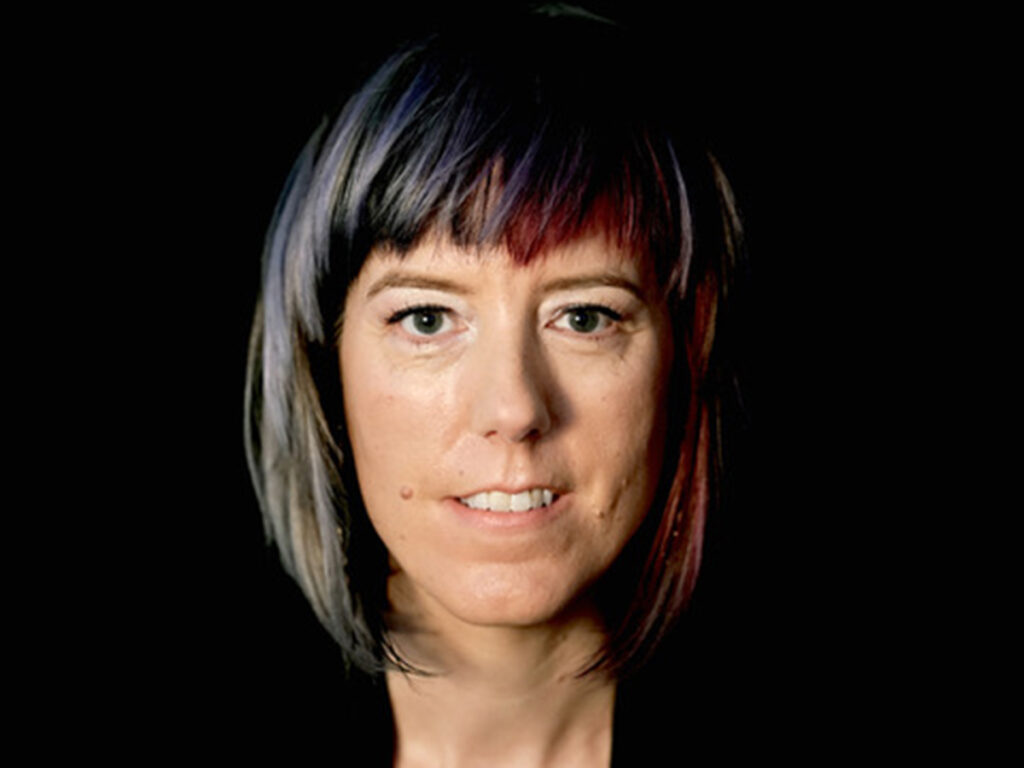
Kathryn Walsh
Assistant Professor, Performing Arts
Kathryn Walsh is a professional theatre director whose work primarily comprises imaginative contemporary adaptations of classical plays, in addition to new work. Walsh’s plays have been seen across the country, but she has worked extensively in the Midwest, including with Chicago Shakespeare Theatre, Oak Park Festival Theatre, and Steppenwolf. She is also an associate artist with Flint Repertory Theatre in Michigan.
As an instructor, she tends to focus on teaching her students directing, collaboration, and text analysis, with a focus on mentoring directors in the production process, and she has formerly taught at the University of Chicago and Northwestern University.
Walsh is an alum of both Northwestern and Harvard universities.
What’s the most exciting development/trend happening in your field/medium right now?
I am most excited about the ways that people in the field are responding to contraction with resilience and creativity. Theatres are finding new ways to collaborate with one another to continue to support new work, and I know a lot of individual creatives who are finding ways to work collectively and continue to advocate for more support for artists to do their work in a sustainable way.
What’s the most interesting thing you’ve learned recently?
I just learned that Emerson’s library has a floor that they specifically set up so that student filmmakers could have a library set to film in! Librarians are truly the best.
What’s your favorite work of fiction (any medium) and most interesting work of nonfiction (again, any medium).
I’m terrible at favorites, so here’s two recent things I’ve loved listening to during my move to Boston. For fiction, Robert Jackson Bennett’s Shadow of the Leviathan series. It’s the most mind-bending version of a take on Holmes and Watson I’ve encountered. In the podcast world, I enjoyed Mind Games, a podcast about neuro-linguistic programming and cults.
What do you love to do when you’re not working?
Cooking is one of my favorite ways to unwind. I’m excited for some cozy cooking this fall.
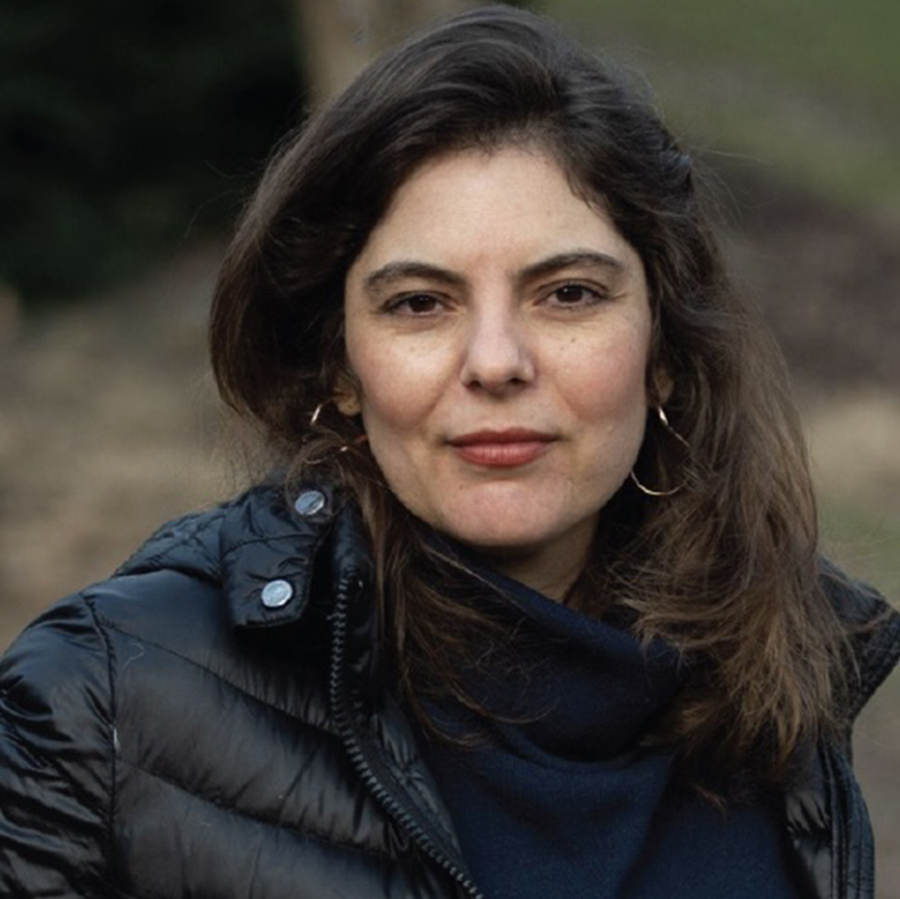
Paula Moura
Journalist-in-Residence, Journalism
Paula Moura is an award-winning multimedia journalist with two decades of experience working for media outlets across the United States and Brazil.
She has previously worked for PBS’ Frontline, The New York Times, Boston’s WBUR, The Washington Post, and NPR’s Sao Paulo bureau. Additionally, she was a 2025-2026 Knight Science Journalism fellow at MIT, and has covered the Brazilian immigrant community for the Martha’s Vineyard Times.
Moura’s various accolades include an Emmy Award and a Peabody Award for her work on the 2022 National Geographic film, The Territory. She is an alum of the Craig Newmark Graduate School of Journalism at CUNY in New York City.
What’s the most exciting development/trend happening in your field/medium right now?
It’s been encouraging to see journalists stay resilient, standing up for journalistic values while also innovating.
In terms of innovation, trilingual news outlet Sumaúma, in Brazil, has shifted perspectives by covering the news through the lens of Earth’s largest biomes, like the Amazon forest, as centers of power. Their cartoons based on fact-checked history and science, but told from the point of view of “non-humans” like a howler monkey in the forest and a stranded caramel horse during massive floods, stand out.
A recent Nieman Lab story about news outlets gamifying journalistic investigations to reach other audiences is also refreshing, and shows journalists’ ability to adapt to new mediums.
What’s the most interesting thing you’ve learned recently?
Aside from the fact that young kids are obsessed right now with squishy toys shaped like food… I learned that hundreds of scientists are involved in a megaproject to research insect species in the Amazon forest. In a single spot, they found an enormous number of them – preliminary data suggests 40,000 species! That’s nearly 0.7 percent of the estimate of 6 million living insect species in the world! Scientists think they will find even more species as they expand the area of study. The picture of a female mantid is adorable!
What’s your favorite work of fiction (any medium) and most interesting work of nonfiction (again, any medium).
I love reading Brazil’s most acclaimed writer, Machado de Assis (1839-1908). His novels and short stories feel remarkably ageless. He has a sharp wit for social commentary and his narrators are fascinating. His most celebrated novel, The Posthumous Memoirs of Bras Cubas, has a great English translation. I also recommend his short story, “The Fortune-teller.”
A nonfiction book I couldn’t stop reading was the biography Into the Amazon: The Life of Cândido Rondon, Trailblazing Explorer, Scientist, Statesman, and Conservationist, written by former New York Times correspondent Larry Rohter. Rondon became close to U.S. president Theodore Roosevelt after their excruciating journey in the Amazon, and that’s what people usually know about. But the book illuminates other aspects of Rondon’s life, including a vast amount of scientific and anthropological production, and his role in shaping policies to protect Indigenous peoples’ ways of life – Rondon himself was of Indigenous descent.
What do you love to do when you’re not working?
I love walking in nature, listening to music and podcasts, and practicing karate (yes, I got the coveted black belt, but I learned that’s just the beginning of a longer journey!).
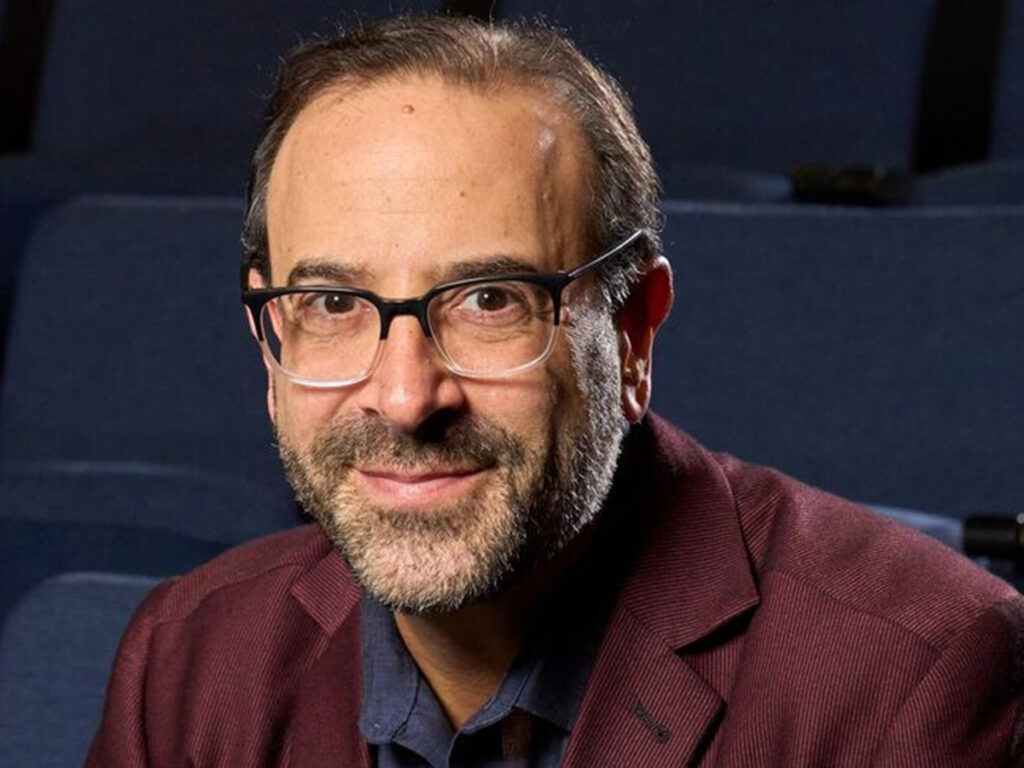
Ken Weitzman
Professor, Performing Arts
Ken Weitzman is a playwright whose work has been produced internationally, including at the Humana Festival, Denver Center, Atlantic Theater Company, and Riverside Studios London, among others. His interdisciplinary project, an experiential event called The Happiness Gym, is currently receiving a National New Play Network Rolling World Premiere, and was profiled in American Theatre Magazine. His latest play, Recognition, will premiere in April 2027 at Theatre Lab.
Weitzman’s accolades include the L. Arnold Weissberger Award, TCG Edgerton New American Play Award, and the Fratti/Newman Political Play Contest Award. Additionally, he’s been commissioned by the San Francisco Museum of Modern Art, Arena Stage, Alliance Theatre, and South Coast Repertory, among others.
Before joining the Emerson faculty, Weitzman taught at Stony Brook University, Indiana University, Emory University, and the University of California San Diego.
What’s the most exciting development/trend happening in your field/medium right now?
I find it hard to generalize, but it does seem that many theatres are trying to go beyond the ‘show up-see a play-and go home’ model. They’re instead trying to become more like community hubs, finding more ways to connect and serve the communities they’re in.
I also see many theatres seeking out more experiential work. The two (community and experiential work) often go hand-in-hand. That was certainly part of my motivation for creating The Happiness Gym; wanting to create an event that can help expand a theatre’s mission and contribute to positive associations and interactions between the theater and its community.
What’s the most interesting thing you’ve learned recently?
I’ve been working on a play about Elizebeth Smith Friedman. Learning about her has been fascinating and shocking; shocking that I didn’t know about her before, and that she’s not generally better known and better celebrated.
She was the youngest child of nine and, in 1914, the only in her family to go to college. She studied Shakespeare, which, through a series of wild events, led to her becoming one of this country’s first codebreakers, influencing the outcome of both world wars and (along with her husband) laying the foundation for the science of cryptology and modern encryption techniques used to this day by the NSA, FBI, and CIA.
Her story was hidden until recently because J. Edgar Hoover buried her contributions to steal credit for himself.
What’s your favorite work of fiction (any medium) and most interesting work of nonfiction (again, any medium).
I don’t really have a single favorite work of fiction. I will say I’m a sucker for satirical fiction about academia. Dear Committee Members by Julie Schumacher is laugh-out-loud funny. The entire book is told through one professor’s letters of recommendation. In terms of plays I’ve seen recently that I loved: John Proctor is the Villain by Kimberly Belflower, and Mexodus by Brian Quijada and Nygel D. Robinson.
Nonfiction, I tend to become obsessed with the research around whatever play I’m working on, so certainly, The Woman Who Smashed Codes by Jason Fagone about Elizebeth Smith Friedman. But I’m also working on a musical and recently read The Secret Life of the American Musical by Jack Viertel, which is a terrific insider’s guide to the history of, making of, and business of the Broadway musical.
What do you love to do when you’re not working?
I’m an avid tennis player. And I love taking hikes or leisurely nature walks, especially with my kids.