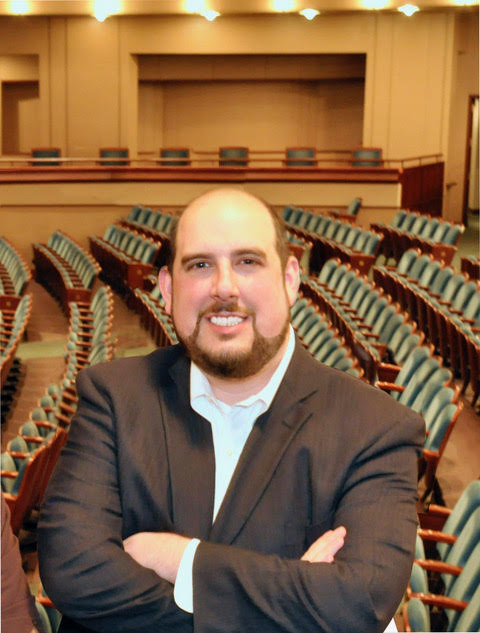
Scott Shiller ’97 remembers the show that changed the trajectory of his career—a Blue Man Group performance that he saw while he was an Emerson student.
Now, 30 years later, Shiller has returned to Emerson as the inaugural Vice President of the new Division of Media and Arts Ventures (MAV), bringing with him a career spent creating and leading unforgettable live theater experiences in Boston, Chicago, Miami, Denver, Pittsburgh, South Carolina, and beyond. Most recently, Shiller was Chief Operating Officer of the Peace Center in Greenville, SC, where he oversaw the expansion of the six-acre campus to include four new arts venues.
At Emerson, Shiller will lead MAV, which builds on the work of the Office of the Arts and brings together ArtsEmerson, WERS, Emerson Contemporary, UnCommon Corner, student media, and Emerson’s Boston theaters.
Shiller recently spoke about his new role, his love for live theater, and his Emerson experience.
What attracted you to this new position and opportunity?
Shiller: I am so excited about the Division of Media and Arts Ventures and the way this new division will reimagine how Emerson leads and manages its arts and media enterprise, and evolves what was previously the Office of the Arts into something broader, bringing numerous programs together for the first time under shared leadership. Through President Jay Bernhardt’s leadership, the Extraordinary Emerson strategic plan was created and it is clear that the plan connects to the bold vision for this new division. It is humbling to come back to Boston and the Emerson community and help build on the strong foundation that currently exists at ArtsEmerson, Emerson Contemporary, WERS, and other divisions. Each of these exceptional lines of programming are clearly devoted to stories and storytellers and I can’t wait to be a part of their expansion. I’m excited to bring these lines of business under a central umbrella and add fuel to the engine as Emerson launches this new chapter of the strategic plan.
What are you looking forward to about the position?
Shiller: Returning to Boston. Immediately after graduation, I was lucky enough to work in Boston’s downtown Theatre District for many years at Broadway in Boston. The opportunity to return to Emerson, and return to Boston, and continue creating unforgettable shared experiences across the downtown Theatre District is a dream come true.
What are your priorities for your first year in the role?
Shiller: My first priority is to meet with internal stakeholders and really understand how we can leverage the resources that are coming under this new umbrella of Media and Arts Ventures, to expand the way we connect visiting artists to our many lines of media. The goal is to be sure that we are serving our students, faculty, alumni, artists, our ticket buyers, and the guests coming into our amazing theaters in the downtown Theater District. I will also work to deepen our visibility and presence across Boston and beyond, keeping our historic theatres in active use and building on our earned revenue and philanthropic partnerships, sustaining and expanding our programs and allowing us to reach a level and impact in the media and arts that few institutions can match.
How do you envision the Division of Media and Arts Ventures influencing an Emerson education?
Shiller: Our goal is to create something bigger and more impactful, for our community and—most importantly—for our students, who will increasingly gain mentored professional experiences working on their own campus. These new opportunities will open real professional pathways in the fields students came here to enter.
What opportunities do you see for the Division of Media and Arts Ventures to innovate?
Shiller: Programs such as WERS, Emerson Contemporary, ArtsEmerson, and the UnCommon Corner are already innovating daily. I want to understand the full breadth and scope of Emerson’s public facing programs and find ways those programs are integrated to serve both the greater Boston community and the College community. I want to ensure we are featuring stories from around the world and around the corner. Without a doubt, we will be experimenting with new genres and new presentation styles. We’ll innovate, experiment, measure, adjust, and experiment again.
What’s it like returning to work at your alma mater?
Shiller: I can’t wait to be part of the Emerson community again. As an alum, I’ve been incredibly impressed with the College’s vision and expansion, and wanting to be a great community partner in downtown Boston. I’m really looking forward to getting to know the current campus, and the wider Emerson community.
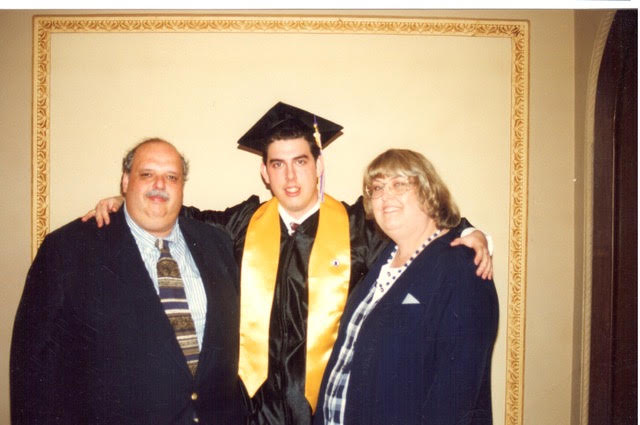
How did Emerson prepare you for a career in arts administration?
Shiller: When I was 19, I saw a production in downtown Boston that changed my life and set me on the career path that has led me back to Emerson 30 years later. I was lucky enough to see one of the first previews of Blue Man Group at the Charles Playhouse.
When I walked into that production, I didn’t know what to expect, and what I saw changed my life. The artists were using every communication tool in their toolbox to tell a story using video, lighting, new instruments, drums, and electronic music, and I got so caught up in the experience that by the end of the show I was standing on my chair with toilet paper running through the audience and we were all yelling and screaming. I realized that I wanted to be part of creating that type of theater. I wanted to present productions that can bring you to your feet and transform the world. For me, that production made me realize I didn’t want to be onstage as a Blue Man, I knew I wanted to be part of the producing team that provides resources and guidance for artists to create an experience.
My Emerson student experience was made up of three pillars:
The classroom: where incredible professors were at the center of learning. I rolled around on the floor, and learned to breathe from my diaphragm. I read the classics and learned how to annotate a Shakespearean script.
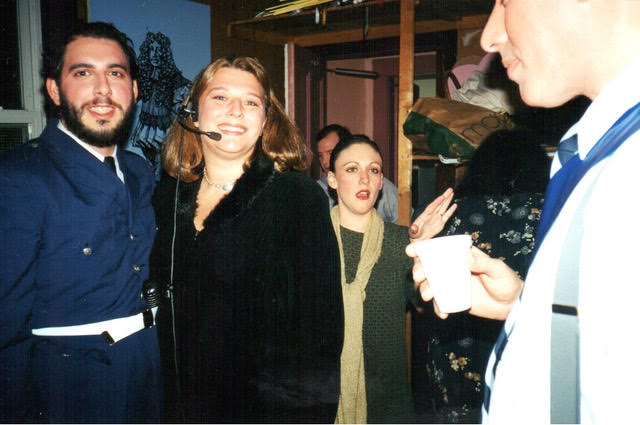
Hands-on experiences in state of the art venues: I learned my craft by taking the classroom lessons and putting those lessons on their feet. While at Emerson I participated in a lot of productions and shows—really from the first week of school to the last week of graduation—I was constantly rehearsing or performing. I got to work with so many of Emerson’s talented faculty directors, set designers, and stage managers.
Access to professional, world-class performances: with a campus in the heart of the theater district, I saw ground breaking new work, pre-Broadway plays, and the world’s best musical. I attended performances at the Huntington, A.R.T., SpeakEasy stage, and more.
These three key elements make an Emerson education different from any other college in the country. Now, Emerson is presenting that professional work ourselves and bringing in artists, not just to entertain our guests, but to inspire our students.
You’re a Tony Award voter. How did you get that gig?
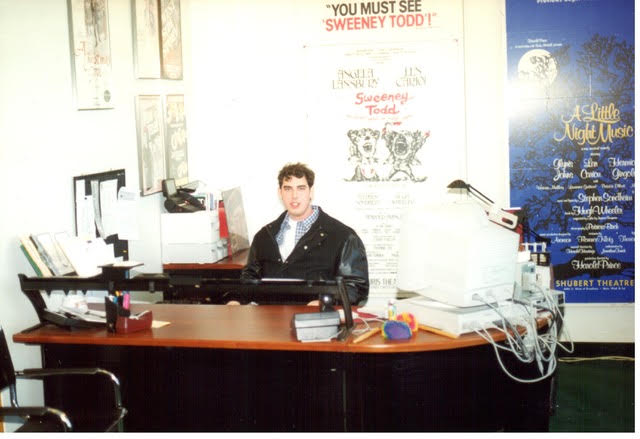
Shiller: I have been a member of the Broadway League, the trade association for Broadway and Touring Broadway, for over 15 years now. I have been presenting touring Broadway productions since I graduated from Emerson. I got an internship my senior year working for 7-time Tony Award winning producer Jon B. Platt. At the time Jon was operating the Emerson Colonial Theatre, The Wilbur Theatre, and the Charles Playhouse. I’ve spent my career presenting touring and pre-Broadway theater in Boston, Los Angeles, Chicago, D.C., Miami, Denver, Pittsburgh, and more.
You’ve had a lifelong love for live theater. What fostered that love?
Shiller: My parents met as students at Emerson—and they ended up both getting professorships in the St. Louis area where my brother and I grew up. My mom and dad wanted us to have the same access to arts and culture they had growing up in the New York City area and then in Boston. We couldn’t afford orchestra tickets. The Fox Theatre in St. Louis would give away the back two rows of the theater for free. So, my dad would pack us up with folding chairs and a picnic lunch, and we’d sit under the marquee to wait for rush tickets. I fell in love with theater from the back row and seeing stories unfold on stage, and I was hooked from that point forward.
Is there a particular accomplishment or moment in your career that you’re especially proud of?
Shiller: What I’m proud of the most, is that over the course of my career in the many different cities I’ve been privileged to work—I’m really proud of the idea that if we’re doing our jobs right, we’re making three groups happy: the audience, the artists, and the accountants.
How do you envision the Division of Media and Arts Ventures influencing an Emerson education?
Shiller: Our goal is to create something bigger and more impactful, for our community and—most importantly—for our students, who will increasingly gain mentored professional experiences working on their own campus. These new opportunities will open real professional pathways in the fields students came here to enter.
What opportunities do you see for the Division of Media and Arts Ventures to innovate?
Shiller: Programs such as WERS, Emerson Contemporary, ArtsEmerson, and the UnCommon Corner are already innovating daily. I want to understand the full breadth and scope of Emerson’s public facing programs and find ways those programs are integrated to serve both the greater Boston community and the College community. I want to ensure we are featuring stories from around the world and around the corner. Without a doubt, we will be experimenting with new genres and new presentation styles. We’ll innovate, experiment, measure, adjust, and experiment again.
What’s it like returning to work at your alma mater?
Shiller: I can’t wait to be part of the Emerson community again. As an alum, I’ve been incredibly impressed with the College’s vision and expansion, and wanting to be a great community partner in downtown Boston. I’m really looking forward to getting to know the current campus, and the wider Emerson community.
How did Emerson prepare you for a career in arts administration?
Shiller: When I was 19, I saw a production in downtown Boston that changed my life and set me on the career path that has led me back to Emerson 30 years later. I was lucky enough to see one of the first previews of Blue Man Group at the Charles Playhouse.
When I walked into that production, I didn’t know what to expect, and what I saw changed my life. The artists were using every communication tool in their toolbox to tell a story using video, lighting, new instruments, drums, and electronic music, and I got so caught up in the experience that by the end of the show I was standing on my chair with toilet paper running through the audience and we were all yelling and screaming. I realized that I wanted to be part of creating that type of theater. I wanted to present productions that can bring you to your feet and transform the world. For me, that production made me realize I didn’t want to be onstage as a Blue Man, I knew I wanted to be part of the producing team that provides resources and guidance for artists to create an experience.
My Emerson student experience was made up of three pillars:
The classroom: where incredible professors were at the center of learning. I rolled around on the floor, and learned to breathe from my diaphragm. I read the classics and learned how to annotate a Shakespearean script.
Hands-on experiences in state of the art venues: I learned my craft by taking the classroom lessons and putting those lessons on their feet. While at Emerson I participated in a lot of productions and shows—really from the first week of school to the last week of graduation—I was constantly rehearsing or performing. I got to work with so many of Emerson’s talented faculty directors, set designers, and stage managers.
Access to professional, world-class performances: with a campus in the heart of the theater district, I saw ground breaking new work, pre-Broadway plays, and the world’s best musical. I attended performances at the Huntington, A.R.T., SpeakEasy stage, and more.
These three key elements make an Emerson education different from any other college in the country. Now, Emerson is presenting that professional work ourselves and bringing in artists, not just to entertain our guests, but to inspire our students.
You’re a Tony Award voter. How did you get that gig?
Shiller: I have been a member of the Broadway League, the trade association for Broadway and Touring Broadway, for over 15 years now. I have been presenting touring Broadway productions since I graduated from Emerson. I got an internship my senior year working for 7-time Tony Award winning producer Jon B. Platt. At the time Jon was operating the Emerson Colonial Theatre, The Wilbur Theatre, and the Charles Playhouse. I’ve spent my career presenting touring and pre-Broadway theater in Boston, Los Angeles, Chicago, D.C., Miami, Denver, Pittsburgh, and more.
You’ve had a lifelong love for live theater. What fostered that love?
Shiller: My parents met as students at Emerson—and they ended up both getting professorships in the St. Louis area where my brother and I grew up. My mom and dad wanted us to have the same access to arts and culture they had growing up in the New York City area and then in Boston. We couldn’t afford orchestra tickets. The Fox Theatre in St. Louis would give away the back two rows of the theater for free. So, my dad would pack us up with folding chairs and a picnic lunch, and we’d sit under the marquee to wait for rush tickets. I fell in love with theater from the back row and seeing stories unfold on stage, and I was hooked from that point forward.
Is there a particular accomplishment or moment in your career that you’re especially proud of?
Shiller: What I’m proud of the most, is that over the course of my career in the many different cities I’ve been privileged to work—I’m really proud of the idea that if we’re doing our jobs right, we’re making three groups happy: the audience, the artists, and the accountants.