Aimy Nguyen has experience with having to prove herself. A student at the John D. O’Bryant School of Mathematics and Science in Boston, Nguyen needed to show her coaches and teammates that she could hold her own on a wrestling squad made up of (largely male) students at O’Bryant and Boston Latin Academy.
But communicating confidently, with her team and with the wider world, is another skill altogether, one Nguyen has been developing this summer at Emerson College, which hosted the Boston chapter of Beat the Streets.
Beat the Streets (BTS) is a national wrestling organization that works to build leadership and career skills in youth. It is also one of several local organizations — including the Massachusetts Production Coalition (MPC) and Boston CyberArts — that partnered with Emerson over the summer to introduce local teens to new storytelling skills and possible career paths.
“I think it definitely opened me up into a person who… [is now] comfortable with talking to people I know and I don’t know,” said Nguyen of her five weeks at Emerson with Beat the Streets.
Wrestling with Ideas
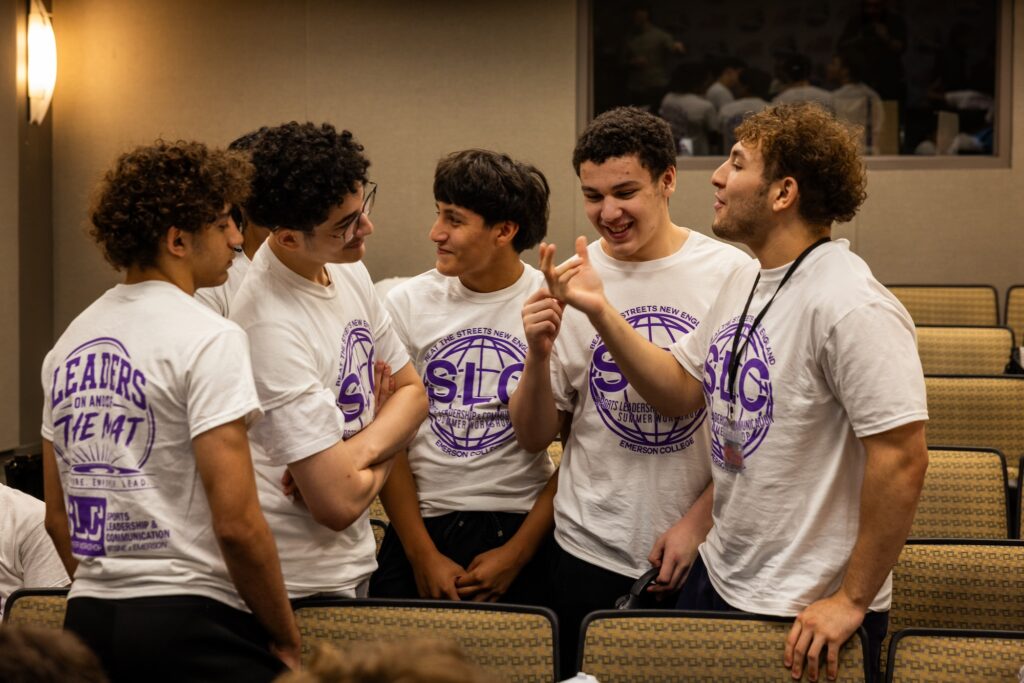
Shepard Vargo, administrative associate to Communication Studies Chair Greg Payne, an all-American wrestler, and BTS’s Boston program director, brought the organization to Emerson with the support of Payne and School of Communication Interim Dean Paul Mihailidis.
Four days a week, for five weeks, approximately 50 teen wrestlers from across Greater Boston spent early mornings and mid-afternoons on the mat in a Paramount Center rehearsal studio. The middle part of their days were spent in workshops with Emerson School of Communication faculty and guest lecturers from the world of sports, journalism, PR, and government, designed to teach students about leadership and finding their voice, podcasting and digital storytelling, broadcasting and sports media, personal branding and public relations, and civic engagement, among other topics.
Exercises included developing and presenting pitches for cities seeking to host the Olympics, practicing live play-by-play for wrestling matches, and developing brand identities for hypothetical products and sports personalities.
Wrestling is a natural entry point to learn about communication and leadership, Vargo said.
“Wrestlers know what it’s like to go through something that’s very difficult and challenging and scary and takes courage … so something that I tied in with the kids is the fear that you felt the first time you went out and wrestled a match— it’s normal to feel that. And I used to feel that all the time when I would do public speaking, and you just get used to it by getting reps in,” Vargo said.
Many of the teens were interested in sports careers before spending their five weeks at Emerson, he said, but now they have a much wider perspective of what that might entail.
“Now they all want to create content, they want to do broadcasting, they know about soft power and how important that is in the world …because they’ve learned about public diplomacy,” Vargo said. “They’ve learned the values that Emerson stands for, and it’s in their backyard.”
Action!
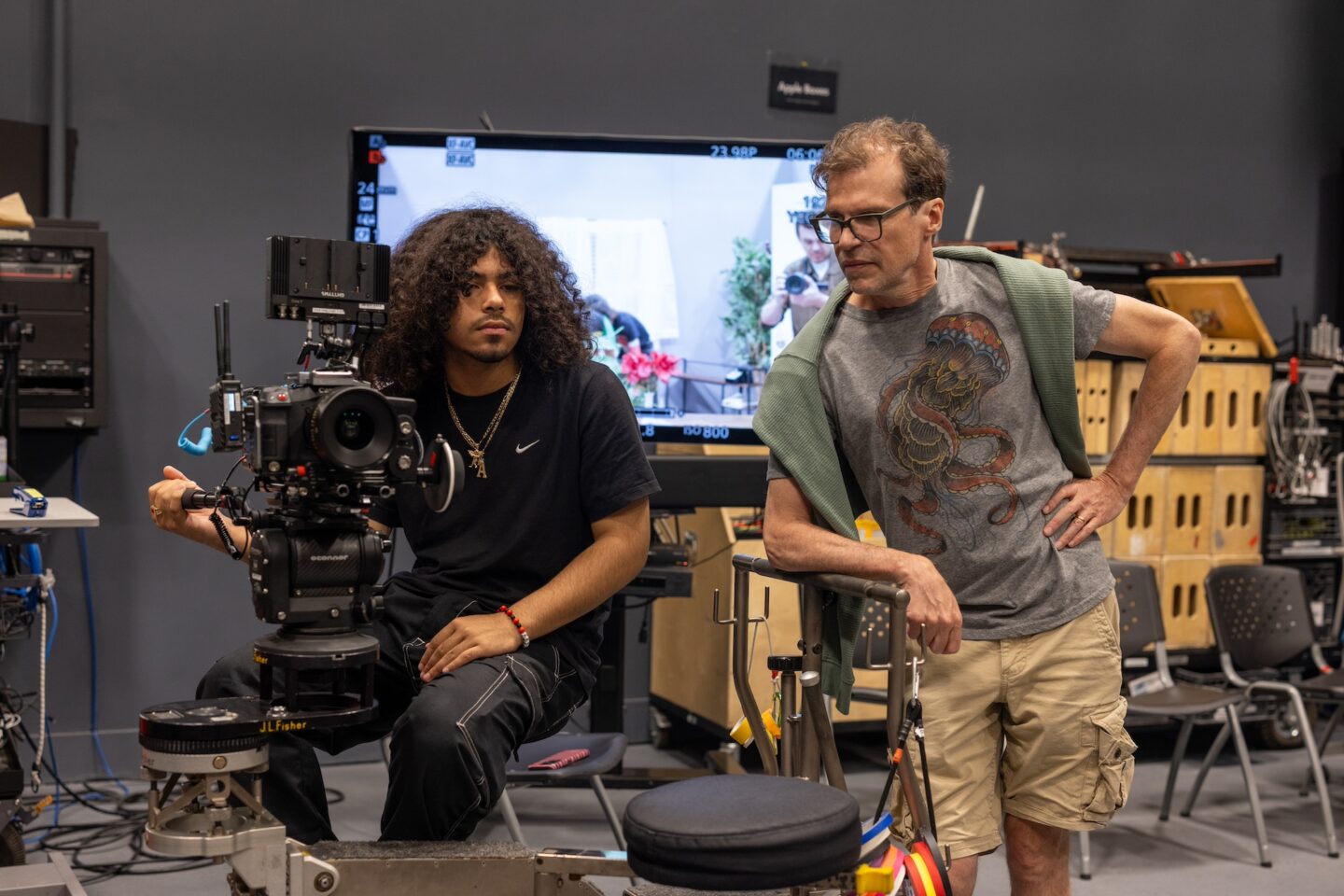
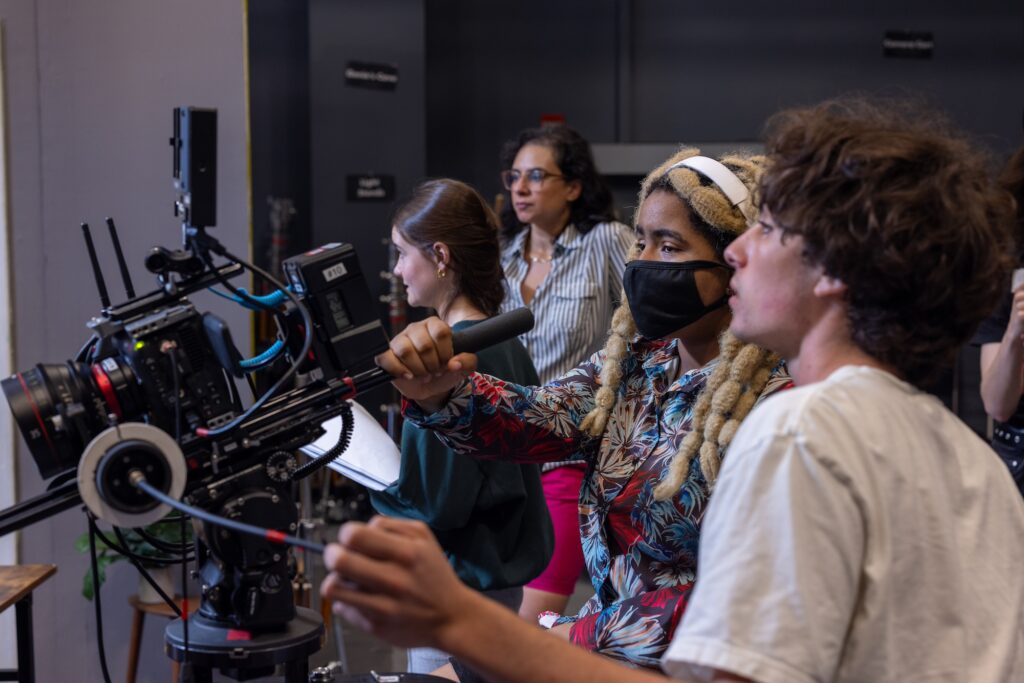
For one week in July, 10 local teens became auteurs as they conceptualized, shot, edited, and screened original film shorts (with the help of Emerson faculty and equipment) through the Massachusetts Production Coalition (MPC) Film Camp.
MPC, a trade association for the state’s media production industry, piloted a few workshops for high schoolers last year, but this year expanded its offerings to a weeklong program, said MPC Executive Director David Hartman.
“Emerson’s just been such an ideal partner for a program like this, and just so welcoming and really embraced the opportunity to bring high school kids from Boston onto campus to receive this really special training and educational opportunity,” Hartman said.
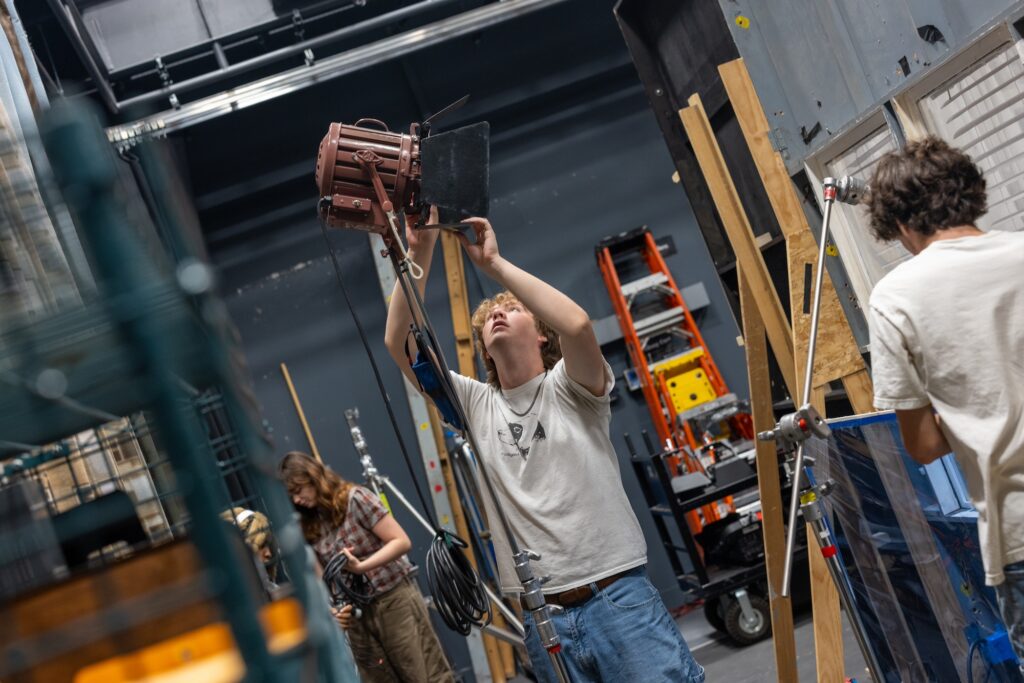
Students split into groups of three, and were tasked to shoot the same script — but in different genres. School of Film, Television, and Media Arts Assistant Professor Hanadi Elyan taught them directing, SOF Associate Professor Harlan Bosmajian coached them on cinematography, SOF Assistant Professor Allyson Sherlock guided them in the editing suite, and Paramount Soundstage Manager Travis Trudell taught the students lighting. At the end of the week, the resulting shorts were screened for family and friends in the Bright Family Screening Room.
Camden Tracy, a student at Swampscott High School, was encouraged to apply for the camp by his film teacher.
“I’ve just been very interested in [filmmaking] and I wanted to see what it’s like in a college film school setting,” he said. “It hasn’t disappointed.”
Tracy’s group shot an action film, with Tracy directing — the role he most would like to fill if he ends up in the film industry. He’s now thinking film school may be in the cards.
“The more I’ve seen of [Emerson], the more I’m considering it,” he said.
Fun and Games
Down the hall from the room where the MPC students were editing their films, Assistant Professor of Game Development and Immersive Media Laurie Mazza was showing a roomful of teens a 1995 game design document for “Race and Chase,” which would, by 1997, become Rockstar Games’ blockbuster series Grand Theft Auto. Game design docs are detailed roadmaps that explain the game’s objectives, story, characters, and art, as well as its interface, monetization plans, target audiences, accessibility, and more.
She wanted to show the teens, who were participating in a summer game design program through Boston CyberArts, how a major franchise gets its start. Having worked on games as a paid consultant and lead technical artist, Mazza also talked to them about monetization and competition in the industry.
Mazza said she’s taught game design principles in the past to kids as young as 12 or 13, and it’s always a “great time,” because they have a different sense of exploration than college students and other adults.
Summer exploration camps like the Boston CyberArts program hold a special place in her heart, Mazza said.
“I think it’s important because you’re helping the next generation figure out their place in the world…so I think Emerson can play a great role in that,” she said. “I think it’s a great stepping stone into looking towards the future.”